Astrophysics Colloquium Archived Talks
2025-2026 archived Astrophysics Colloquium
2024-2025 archived Astrophysics Colloquium
2023-2024 archived Astrophysics Colloquium
2022-2023 archived Astrophysics Colloquium
2021-2022 archived Astrophysics Colloquium
2020-2021 archived Astrophysics Colloquium
Winter 2026
Jan 28, 2026
Kim-Vy Tran (Harvard CfA)
Illumininating the Dark Universe with Strong Gravitational Lensing
 Abstract: With recent and upcoming all-sky surveys such as Euclid, LSST, and Roman, deep high resolution imaging of increasingly vast cosmological volumes is now available. Using machine learning to search for the distinct visual signature of strong gravitational lensing, the AGEL survey identified thousands of strong lensing candidates that span a wide range in mass. The AGEL lenses include deflectors at z>0.5 that are ideal for follow-up spectroscopic studies to address a range of questions in astrophysics and cosmology. I highlight AGEL results including cosmography with compoound lenses, evolution of mass density profiles, and our discovery of Einstein spirals that can be used to constrain super-massive black hole scaling relations to z~1.
Feb 4, 2026
Mansi Kasliwal (Caltech)
Cosmic Fireworks: Building Discovery Engines for Time-domain Astrophysics
 Abstract: Our dynamic Universe is adorned by cosmic fireworks: energetic and ephemeral beacons of light that are a million (nova) to a billion (supernova) times brighter than our sun. Fireworks synthesize most elements in our periodic table -- while supernovae synthesize the lighter elements, neutron star mergers synthesize half the elements in the periodic table heavier than iron. Combining information from multiple messengers - photons, gravitational waves and/or neutrinos - powerfully completes the astrophysical picture. I will describe how we discover cosmic fireworks with robotic telescopes at Palomar Observatory (Zwicky Transient Facility) and how we undertake a global, panchromatic follow-up campaign to characterize the underlying astrophysics (GROWTH Collaboration). Owing to the atomic physics of bound-bound opacity, the infrared is the most sensitive probe of the heaviest elements. I will describe building a series of surveyors to open up wide-field infrared astronomy: Palomar Gattini IR, WINTER, RAPID/Roman and the Cryoscope pathfinder in the Antarctic. I will conclude with discussion of a new spectrograph (Z-shooter) for W. M. Keck Observatory that will enable deciphering the astrophysics and astrochemistry of cosmic fireworks.
Feb 11, 2026
Juliette Becker (University of Wisconsin-Madison)
Companions as Clues: Understanding Hot Jupiter Formation
 Abstract: Hot Jupiters were long thought to be lonely planets. This correctly describes the majority of the population and strongly motivates high-eccentricity tidal migration as the most common method of taking a hot Jupiter to its final short-period orbit. However, a growing number of systems now reveal nearby planetary companions. In this talk, I will discuss recent theoretical and observational results exploring the origin and evolution of hot Jupiters, with a particular focus on those with adjacent companion planets. I show that high-eccentricity tidal migration is generally incompatible with the survival of close-in companions except in very particular scenarios. I further demonstrate that while inner companions are dynamically robust, outer companions can be driven out of the transiting plane through secular interactions, stellar evolution, and stellar obliquity, potentially explaining their apparent absence in some systems. With this in mind, I present the discovery and characterization of the TOI-4468 system as a case study, highlighting how its unique architecture (an outer companion planet, but no inner companion) constrains its dynamical history. The full observational evidence suggests that while most isolated hot Jupiters likely formed through tidal migration, systems with nearby companions preferentially assembled in dynamically cold, disk-mediated ways, revealing multiple formation pathways for close-in giant planets.
Feb 18, 2026
Aliza Beverage (Carnegie)
Reading the Chemical Fossil Record of Massive Galaxies
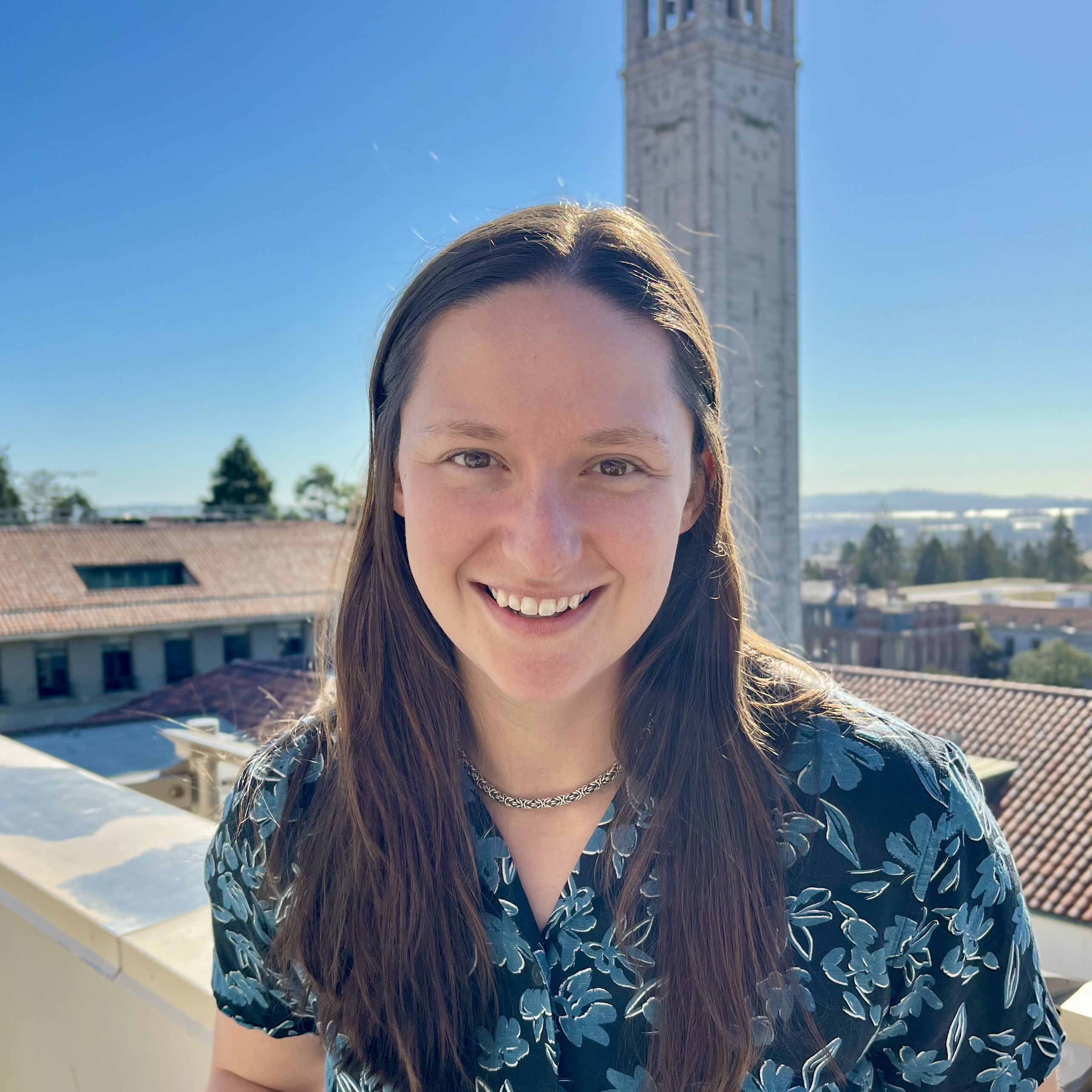 Abstract: Massive galaxies are key to understanding the universe: they form in the most extreme environments, host the largest supermassive black holes, and trace the underlying large-scale structure. Recent JWST observations have dramatically reshaped our view of these systems, revealing that they can assemble astonishingly rapidly and shut down star formation at very early times. Together, these discoveries pose a major challenge for models of galaxy evolution. In this talk, I will show how the chemical properties of galaxies provide a powerful way to address these challenges; stellar chemical abundances serve as a fossil record of past star formation and quenching. Recent JWST spectroscopic surveys are now enabling the first detailed chemical measurements of massive galaxies at early cosmic times. Interpreting these observations, however, requires chemical-evolution models that can link observed chemical properties to their formation histories. I will introduce such a framework and discuss what these new measurements are revealing about when and how the universe’s most massive galaxies formed.
Feb 25, 2026
Malena Rice (Yale)
Dynamical Demographics of Planetary Systems
 Abstract: The current configurations of planetary systems each provide a snapshot in time, encoding fossilized clues about the prevalence and diversity of systems’ evolutionary pathways. Orbital architectures, therefore, offer fundamental insights into the physical processes shaping planetary systems at both the individual and population level. In this talk, I will describe recent advances in our understanding of the 3D orbital architectures of planetary systems, outlining both observational constraints and their theoretical implications. I will discuss how the dynamic relationship between stars and planets informs the underlying processes sculpting diverse planetary systems.
Mar 4, 2026
No colloquium
Mar 11, 2026
Massimo Pascale (UCLA)
The Universe Seen Through the Lens of Galaxy Clusters by JWST
 Abstract: The chance alignment between distant background galaxies and foreground massive galaxy clusters induces a ‘strong-lensing’ effect where magnified, multiple images of the same background galaxy are seen across the cluster field, each with its own relative ‘time-delay’ in the arrival of photons to the observer. In this talk, I will highlight two dramatic applications of cluster strong-lensing in the era of JWST. First, the combination of JWST’s spatial resolution with lensing magnification has opened up parsec-scale views of galaxies in the early universe, allowing us to probe individual young massive star clusters within them. I will discuss how these star clusters act as laboratories for understanding the extremely dense, bursty star formation seen in cosmic dawn galaxies, and also give insight into the prior lives of ancient globular clusters seen in the local universe. Second, JWST has proven to be an effective discovery engine for galaxy cluster-lensed supernovae, whose measurable time delays enable a ‘single-rung’ inference of the Hubble constant. I will report current efforts to measure H0 from these events, including the first precision constraints from a lensed Type Ia supernova, and introduce the growing sample of new supernovae emerging from ongoing JWST programs such as VENUS.
Fall 2025
October 8, 2025
Pablo G. Pérez-González (Centro de Astrobiología, CSIC-INTA)
The rise of the galactic empire: probing the very first stages of galaxy formation with JWST
 Abstract: I will present a multi-angle approach to understand when galaxies started forming in the Universe. One approach is directly probing the highest redshifts, specifically in our case, building galaxy samples and determining luminosity functions at z=8-25 based on the deepest JWST/NIRCam surveys (MIDIS+NGDEEP). The second approach involves studying the fossil record found in galaxies at different redshifts (we focus on 3<z<7) for which reliable star formation histories are determined with a 2-dimensional technique. I will discuss how our observational results compare with state-of-the-art galaxy formation simulations.
October 15, 2025
No colloquium
October 22, 2025
Jason Wang (Northwestern University)
New Frontiers in Exoplanet Imaging and Pathways to Habitable Worlds
 Abstract: By spatially resolving faint planets from their bright host stars, we can directly image exoplanets and characterize them as individual worlds. Exoplanet imaging is limited by our ability to separate the signal of the planet from the bright glare of the star. I will discuss novel techniques that allow us to better image exoplanets and, if placed on the next generation of observatories, have the potential for us to study habitable worlds. First, I will present significant improvements to the sensitivity of JWST high-contrast imaging thanks to new data analysis algorithms that utilize techniques from computational imaging that better leverage our knowledge of physics. Next, I will discuss the Roman Space Telescope Coronagraph Instrument, which will demonstrate high-order wavefront control in space and potentially image a planet in reflected light for the first time. I will also discuss how we can use the additional properties of light to improve exoplanet imaging. The Keck Planet Imager and Characterizer (KPIC) combines high spatial and spectral resolution to allow us to spectrally resolve molecular absorption lines in the atmospheres of directly imaged planets. Long-baseline interferometry with VLTI/GRAVITY gives us the spatial resolution of a 140-meter telescope, enabling precise measurements of fundamental exoplanet properties. I will highlight recent science results from these instruments, summarize lessons learned in pioneering these techniques, and discuss their prospects for imaging habitable worlds on the next generation of observatories.
October 29, 2025
John Chisholm (UT, Austin)
A GLIMPSE of the faintest galaxies in the first billion years
The James Webb Space Telescope (JWST) has pushed the redshift frontier to within the first few hundred million years of cosmic history. The earliest galaxies it has uncovered are both brighter and more numerous than pre-JWST models predicted, with surprising abundance patterns that challenge our understanding of early galaxy formation and evolution. While these luminous systems have reshaped our view of the early universe, a vast population of fainter galaxies—hidden below traditional detection limits—holds crucial clues to how the first galaxies assembled and evolved.
In this talk, I present initial results from JWST’s GLIMPSE survey, a Cycle 2 ultra-deep imaging and spectroscopy program targeting Abell S1063, a massive foreground galaxy cluster. The combination of long integrations and gravitational magnification enables the detection of extraordinarily faint galaxies at the edge of the observable universe. I will discuss early findings on the faint-end number density, the diverse physical properties of faint galaxies, and their role in cosmic reionization. These observations offer an unprecedented glimpse into the faintest galaxies that populated the early cosmos.
November 5, 2025
No colloquium - AstroBash
November 12, 2025
Assaf Horesh (The Hebrew University of Jerusalem HUJI)
The Radio Awakens — A New Phenomenon in Tidal Disruption Events
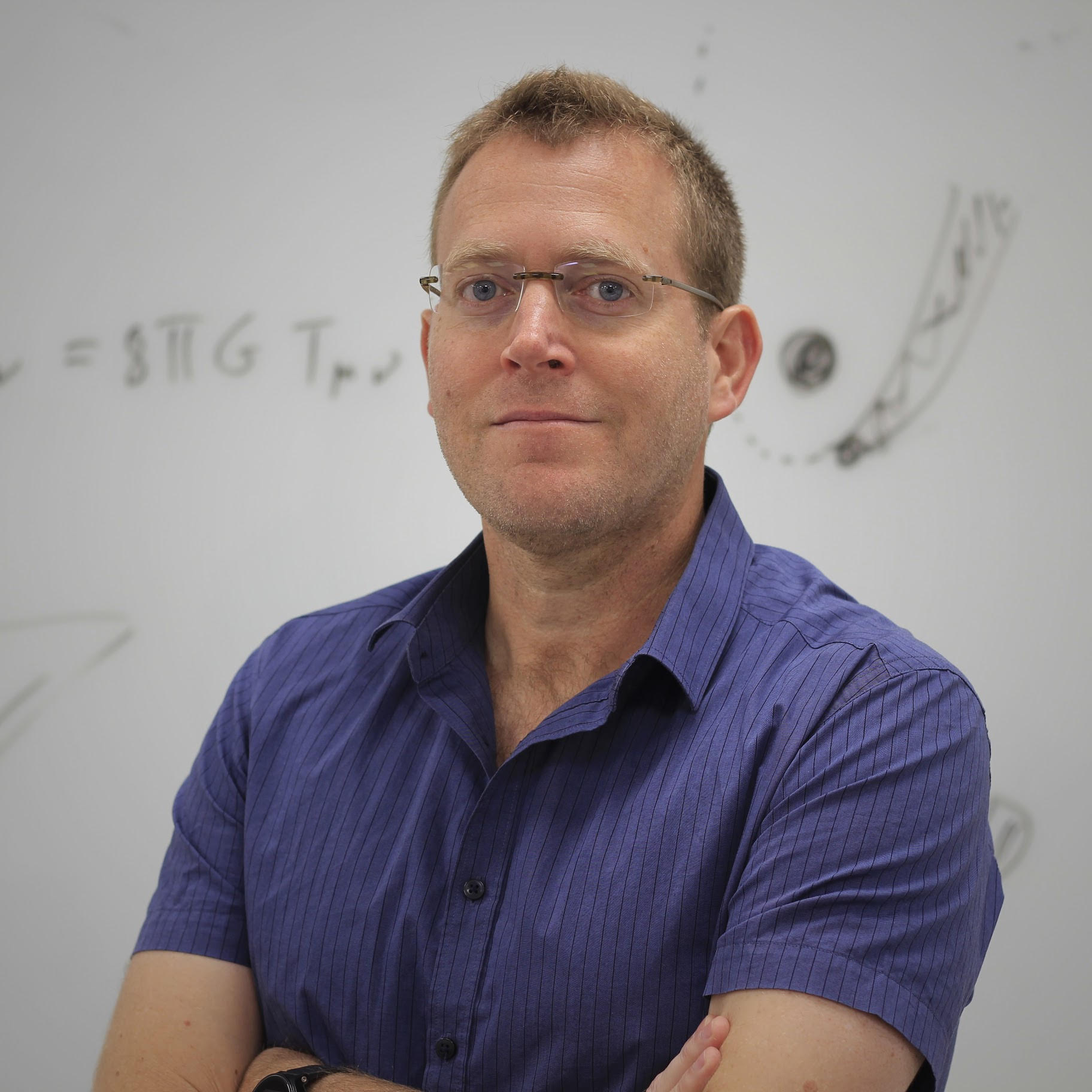
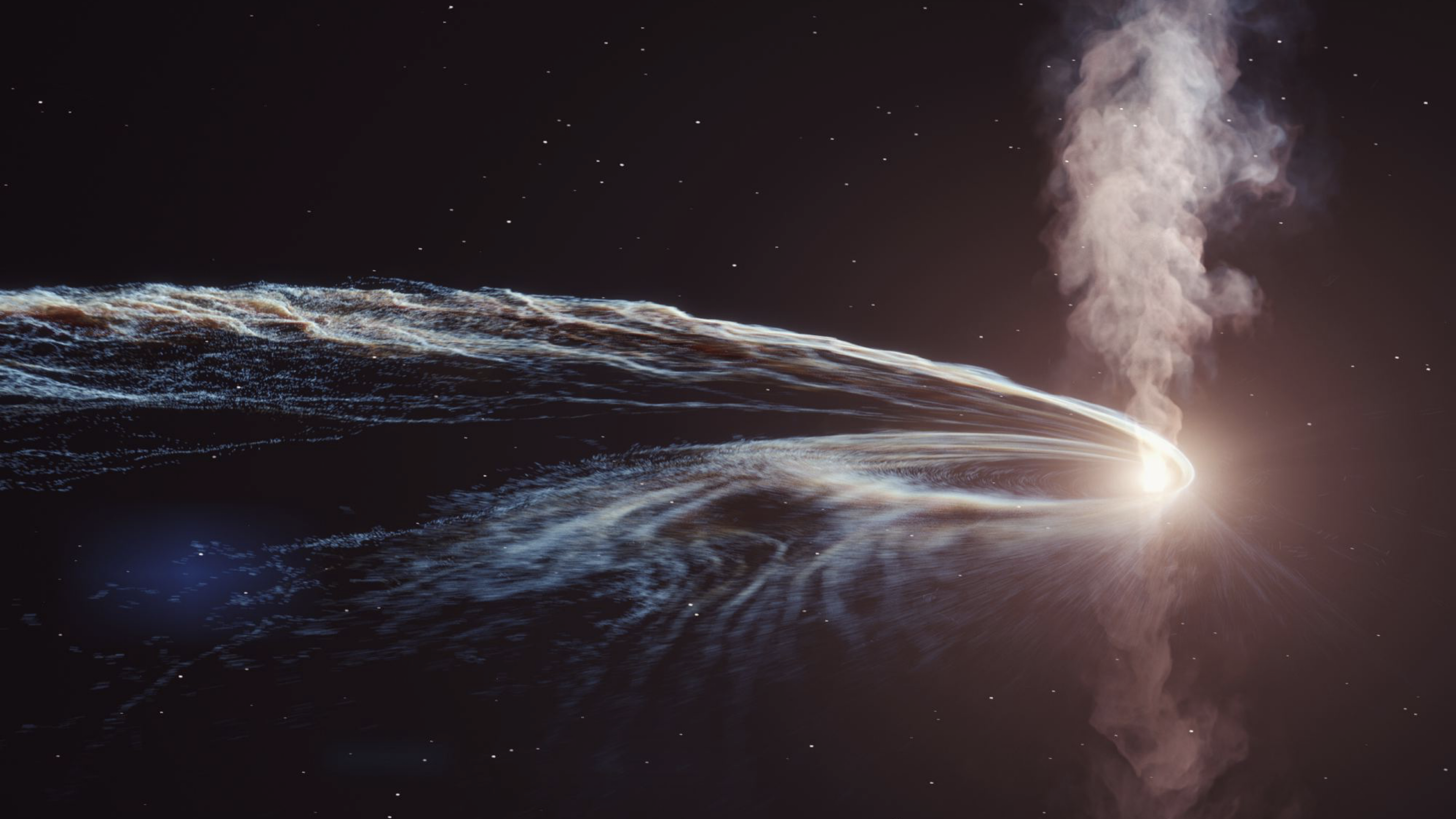 Abstract: When a star is torn apart by a supermassive black hole, a tidal disruption event (TDE) unfolds, producing luminous flares across the electromagnetic spectrum. Radio observations, in particular, provide unique insights into the resulting outflows and the circumnuclear environment. In this talk, I will review what we have learned from radio studies of TDEs and present a newly discovered phenomenon — delayed radio flares, emerging months to years after the initial disruption. I will discuss possible physical origins, including accretion state transitions, delayed ejecta, and off-axis jets, and show evidence that such flares are relatively common. These results may open a new window into how black holes launch outflows.
November 19, 2025
Mor Rozner (University of Cambridge)
From Few-Body to Stellar Clusters: How Gas Reshapes Dynamical Evolution
 Abstract: Gas-rich environments are ubiquitous across various scales, from protoplanetary discs to star clusters and galaxies. Dynamics in these environments are substantially different and give rise to unique astrophysical phenomena, while also enhancing the rates of well-studied ones. In this talk, I will demonstrate some of the unique processes in gas that alter the dynamics in several environments, including nuclear star clusters (NSCs), globular clusters (GCs), and star forming regions; if time allows, I will also discuss protoplanetary discs. I will discuss stellar distributions in gas-rich NSCs, their signatures, and implications for the rates of tidal disruption events (TDEs) and other transients in galactic nuclei. The behaviour of binaries in gas-rich environments also differs qualitatively from that in gas-free regions, leading to enhanced formation of hard binaries, preservation of fragile soft binaries, and even gas-assisted formation of binaries. The abundance of close binaries could potentially contribute to a unique gravitational wave channel in gas.
November 26, 2025
No colloquium - Thanksgiving week
December 3, 2025
Andreas Faisst (Caltech, California Institute of Technology)
Tracing Resolved Star Formation, Dust, and Gas through 12 Billion Years of Cosmic Time
 Abstract: For obtaining a complete picture of galaxies, multi-wavelength observations are crucial to observe their stars, gas, dust, and chemical composition. With Hubble, JWST, and ALMA operating at the same time, we find ourselves in an era where we can jointly observe the UV, optical and infrared light. In my talk, I will present recent results obtained by the synergy of these observatories on the chemical and structural evolution of galaxies from the Epoch of Reionization to Cosmic Noon. I will introduce the contribution of three new programs with JWST (ALPINE NIRSpec/IFU program and MIRI/MRS PAH survey) and ALMA (CHAMPS 1.2mm survey) with which we will study the chemical compositions of z=4-6 galaxies, search for the most dust-obscured sources during the Epoch of Reionization, and measure for the first time spatially resolved PAH dust emission in z=1 galaxies. I conclude by highlighting the important future contributions to these topics by SPHEREx.
Spring 2025
April 2, 2025
Gail Schaeferm (The CHARA Array of Georgia State University)
Imaging Stellar Surfaces with the CHARA Array
 Abstract: The CHARA Array combines the light of six 1-meter telescopes at optical and near-infrared wavelengths with baselines ranging from 34 to 331 meters to achieve milliarcsecond resolution. The Array is used to measure the sizes of stars, image stellar surfaces, detect close binary companions, and resolve the inner structure of circumstellar disks. I will give an overview of the CHARA Array interferometer and highlight recent science results. I will discuss opportunities to apply for open access time and report on recent developments to add a seventh mobile telescope to expand the maximum baseline of the array.
April 9, 2025
Anna-Christina Eilers (MIT)
The Formation and Growth of Supermassive Black Holes at Cosmic Dawn
 Abstract: The existence of luminous quasars powered by supermassive black holes (SMBHs) within the first billion years of cosmic history challenges our understanding of black hole growth. An important piece to the puzzle is the duty cycle and lifetime of the quasars, the fraction of cosmic time that galaxies shine as active quasars and during which the bulk of the black hole growth occurs. In this talk, I will present new avenues towards understanding the early growth phases of SMBHs: I will present the first measurement of the clustering strength between luminous quasars and their surrounding galaxies at z>6 using recent observations from the James Webb Space Telescope (JWST) that allow us to estimate properties of the quasars' host dark matter halos and their duty cycle. Secondly, I will show new results leveraging some of the deepest JWST observations of galaxies in the background and environment of luminous quasars at z>6 to tomographically map the quasars’ ionized bubbles, constraining the extent and geometry of the ionized region, as well as the quasar's lifetime. We find that SMBHs seem to grow on much shorter timescales than expected, providing a potential solution to the long-standing puzzle of early black hole growth.
April 16, 2025
Davy Kirkpatrick (Caltech/IPAC)
The (Sub)Stellar Initial Mass Function (8 MSun to 5 MJup) Based on the 20-pc Census
 Abstract: In recent years, we have taken dramatic steps forward in constructing a more complete view of the stellar and substellar constituents within the immediate vicinity of the Sun. Gaia has measured exquisite parallaxes on objects as cold as mid-L within 20 pc and continues to provide updated multiplicity statistics. A combination of WISE discoveries plus Spitzer and ground-based parallaxes has enabled us to fill out the rest of the Sun's nearest census, at least down to early-Y dwarfs. Using this 20-pc census, we are now able to study the initial mass function in the field across a range of masses from 8 MSun down to at least 5 MJup. As this census represents the closest and most thoroughly studied sample we have, our aim is to avoid the multiplicity biases that have plagued other surveys by decomposing each system into its individual components and providing mass estimates for each. In this talk, I discuss the process of constructing the census, how we deduce the shape of the mass function from the statistics, and what the results could mean for the underlying star formation process itself.
April 23, 2025
Jim Dunlop (University of Edinburgh)
Charting early galaxy formation and growth with JWST and ALMA
 Abstract: The James Webb Space Telescope (JWST) is transforming our view of galaxy formation and evolution in the young Universe. I will provide an overview of the latest results from the
PRIMER survey, the largest JWST Cycle-1 “Galaxies” programme which, in combination with
other public JWST imaging, is now enabling us to chart the emergence of the galaxy
population back to within ~300 million years of the Big Bang. Specifically, I will present and
discuss the first robust determination of the evolving UV galaxy luminosity function extending
out to redshifts z~13, as well as new measurements of the galaxy stellar mass function
reaching out to z~9. I will then interpret these results in the context of our current
understanding of the evolving dark matter halo mass function and the efficiency with which
galaxies are able to convert their baryons into stars. Finally, I will discuss new results on the
early growth of dust-enshrouded star formation, and the prospects for future progress
exploiting the combined power of JWST and the Atacama Large Millimeter Array (ALMA).
Abstract: The James Webb Space Telescope (JWST) is transforming our view of galaxy formation and evolution in the young Universe. I will provide an overview of the latest results from the
PRIMER survey, the largest JWST Cycle-1 “Galaxies” programme which, in combination with
other public JWST imaging, is now enabling us to chart the emergence of the galaxy
population back to within ~300 million years of the Big Bang. Specifically, I will present and
discuss the first robust determination of the evolving UV galaxy luminosity function extending
out to redshifts z~13, as well as new measurements of the galaxy stellar mass function
reaching out to z~9. I will then interpret these results in the context of our current
understanding of the evolving dark matter halo mass function and the efficiency with which
galaxies are able to convert their baryons into stars. Finally, I will discuss new results on the
early growth of dust-enshrouded star formation, and the prospects for future progress
exploiting the combined power of JWST and the Atacama Large Millimeter Array (ALMA).
April 30, 2025
Tomer Yavetz (IAS)
Bars and Spirals: Deciphering the Dynamical Clues Hidden in the Gaia Data
 Abstract:
The striking morphologies of spiral galaxies have long captured the imagination of both the general public and professional astrophysicists. Yet even basic questions about their diversity of dynamical structures — how they form, how they evolve, and why they appear in some disk galaxies but not others — remain largely unresolved. Our own Milky Way, with its central rotating bar and spiral arms, offers a unique window into the dynamical underpinnings of these features.
Abstract:
The striking morphologies of spiral galaxies have long captured the imagination of both the general public and professional astrophysicists. Yet even basic questions about their diversity of dynamical structures — how they form, how they evolve, and why they appear in some disk galaxies but not others — remain largely unresolved. Our own Milky Way, with its central rotating bar and spiral arms, offers a unique window into the dynamical underpinnings of these features.  As the only galaxy where we can trace the motions of individual stars in detail, it holds the key to understanding spiral structure and bar dynamics more broadly. But our vantage point within the disk complicates the picture: even with Gaia’s extraordinary six-dimensional stellar data, our view is limited to a local patch, and much of the global dynamical structure remains obscured. Still, that local patch is rich with dynamical clues and hints. Armed with new theoretical tools — adapted from fields ranging from plasma physics to cosmology — our ability to extract global information from local measurements has made significant progress. In this talk, I will show how new projections of the Gaia data, guided by a deeper theoretical understanding of galactic dynamics, are allowing us to reveal the transient nature of the Milky Way’s spiral arms, and to constrain the mass, pattern speed, and slowdown rate of its central bar.
May 7, 2025
Fei Dai (U. Hawaii)
Resonant Chains as the Initial Configuration of Kepler-like Planetary Systems
 Abstract:
Ancient philosophers like Pythagoras and Kepler speculated that the planets of the Solar System might be arranged in resonant orbits—where their periods follow simple integer ratios (e.g., 3:2, 2:1)—as part of a Grand Design. However, except for Neptune and Pluto, the current-day Solar System planets are largely non-resonant. Similarly, most of the ~1000 confirmed exoplanetary systems (typical age of ~5 Gyr old) also exhibit non-resonant configurations. Our work recently revealed that the vast majority (~80%) of planetary systems younger than 100 Myr appear near (but not in) mean-motion resonance. We also found the fraction of resonant systems decreases steadily with time.
Abstract:
Ancient philosophers like Pythagoras and Kepler speculated that the planets of the Solar System might be arranged in resonant orbits—where their periods follow simple integer ratios (e.g., 3:2, 2:1)—as part of a Grand Design. However, except for Neptune and Pluto, the current-day Solar System planets are largely non-resonant. Similarly, most of the ~1000 confirmed exoplanetary systems (typical age of ~5 Gyr old) also exhibit non-resonant configurations. Our work recently revealed that the vast majority (~80%) of planetary systems younger than 100 Myr appear near (but not in) mean-motion resonance. We also found the fraction of resonant systems decreases steadily with time.  In this talk, I will discuss how convergent disk migration naturally leads to the formation of resonant planetary chains and how subsequent dynamical evolution disrupts these resonances. I will also highlight how transit timing variations (TTVs) can serve as a powerful tool to probe the dynamic state of young planetary systems. Resonant-chain planetary systems serve as ideal testbeds for the evolution of planetary atmospheres. Finally, I will compare and contrast the non-resonant Solar System with near-resonant young planetary systems.
Brief bio: Dr. Dai is currently a faculty member at the Institute for Astronomy, University of Hawaii. Previously, he was a NASA Sagan Fellow at Caltech. He earned his PhD in Physics from MIT and his Bachelor's degree from the University of Cambridge.
May 14, 2025
May 21, 2025
Julian Munoz (University of Texas)
New cosmological insights from JWST
Abstract: The James Webb Space Telescope (JWST) has revolutionized our understanding of the early universe through its unprecedented infrared capabilities. This talk will explore how early JWST observations fit — or don’t — within our cosmological and galaxy-formation models. I will first discuss the higher-than-expected abundance of early (z>9) galaxies in JWST, and how clustering measurements are key for understanding its origin. I will then show how to use Hubble data to constrain the so-called "universe breaker" galaxies believed to be too massive to exist in LCDM. Finally, I will examine how recent JWST determinations of cosmic reionization may be at odds with complementary cosmological probes, including the CMB and the Lyman-alpha forest, and discuss potential solutions and implications for both cosmology and astrophysics.
May 28, 2025
Yoram Lithwick (Northwestern)
Enceladus and its Limit Cycle
Abstract: Enceladus is a moon of Saturn. It has some remarkable features, including geysers that spray water into space; a global ocean beneath its surface ice shell; and a large luminosity. I will describe how these phenomena are consequences of Enceladus being in a "limit cycle": it ice shell freezes and thaws on a timescale of around 10 million years, as its orbit gets closer and further to its neighbor moon Dione.
June 4, 2025
Tommaso Treu (UCLA)
The "Hubble Tension": New results on the expansion history of the universe from the TDCOSMO-2025 milestone
Abstract: The standard Lambda Cold Dark Matter (LCDM) model gives a successful description of many astrophysical observations. However, in the past few years a tension has developed between local determinations of the current expansion rate of the Universe (the Hubble constant) and the value predicted from early universe probes. If confirmed, this so-called Hubble Tension would require additional physical ingredients beyond LCDM, e.g. early dark energy, or new particles. After describing the tension, I will provide a major update of a 25-year long effort to measure the expansion history of the universe and thus the Hubble constant using gravitational time delays, highlighting new results based on lensed quasars from the TDCOSMO collaboration based on JWST, HST, Keck, and VLT data, and recent methodological breakthroughs.
Winter 2025
January 22, 2025
Kyle Kremer (UCSD)
Globular Clusters: Astronomical factories of gravitational-wave and electromagnetic transients

 Abstract: It is now widely established that globular clusters host robust populations of white dwarfs, neutron stars, and black holes throughout their lifetimes. Within clusters, dynamical processes enabled by stellar densities thousands to millions of times larger than typical galactic environments facilitate interactions involving these stellar remnants that power an array of astrophysical transients. In particular, stellar clusters have emerged as an important formation site for merging black hole binaries, similar to those recently detected as gravitational wave sources by the LIGO/Virgo/KAGRA collaboration. In this talk, I will review our current understanding of stellar remnants in globular clusters, discussing current observational evidence and the ways stellar remnants influence the dynamical evolution of their hosts. I will describe the formation of merging binaries detectable as gravitational wave sources and connect to a number of other sources observed in clusters including black hole+star binaries, tidal disruption events, radio pulsars, and fast radio bursts. In the coming years/decades, globular clusters promise to be a nexus for transient astrophysics, connecting to current/next-generation gravitational wave facilities, all-sky surveys like the Rubin Observatory, and state-of-the-art radio telescopes.
January 29, 2025
Floor Broekgaarden (UCSD)
Gravitational Wave Paleontology: a New Frontier to Explore the Formation, Lives, and Deaths of Massive Stars Across Cosmic Time
We are on the precipice of the Big Data gravitational-wave era. Pairs of stellar-mass black holes and neutron stars across our vast universe occasionally merge, unleashing bursts of gravitational waves that can now be detected here on Earth. Over the next few years, the population of detected mergers will rapidly increase from about a hundred today to millions of detections per year as new observing runs and next-generation detectors provide data with ever-increasing precision and to larger distances, pushing the reach of gravitational-wave astronomy to the edge of the observable universe! Most excitingly, this wealth of data will provide an unprecedented probe of the physics of black holes and neutron stars, and of the evolution of the binary massive stars that once formed them. This could open the new frontier of ‘gravitational-wave paleontology’: studying massive stars and binary evolution from their ‘remnant’ compact object mergers, with the goal of answering some of the biggest open questions in astrophysics today: How do these gravitational-wave sources form? What can we learn from them about the formation, lives, and explosive deaths of massive stars across cosmic time? How do these sources help to enrich the universe with heavy metals? In this talk, I will outline the main bottleneck in this field: the “Progenitor Uncertainty Challenge”. I will discuss how my research group is leading efforts to identify, quantify, and eventually overcome this challenge with the aim to open the new frontier of gravitational-wave paleontology and make unprecedented discoveries about massive stars across cosmic time from gravitational waves, as well as from other upcoming multi-wavelength and multi-messenger observations.
February 5, 2025
Cancelled
February 12, 2025
Kevin Hainline (University of Arizona/Steward Observatory)
The Break of Cosmic Dawn: What We’ve Learned About The Early Universe from JWST/JADES
 Abstract: Since the launch of JWST, our understanding of the first stars and galaxies has come into sharp focus. Photometric and spectroscopic observations have taught us both about the unique star formation histories as well as the gas and ionization properties for galaxies in the first few hundred million years after the Big Bang. In this talk, University of Arizona Associate Research Professor and JWST Advanced Deep Extragalactic Survey (JADES) team member Kevin Hainline will describe what we have learned about galaxies at z > 10 from ultra deep observations in both the GOODS-S and GOODS-N fields. He will describe the spectroscopic confirmation of the highest-redshift galaxies, and what their emission lines, and lack thereof, tells us about the gas metallicity, escape fractions, and star-formation histories for these sources. In addition, he will discuss the challenges of photometric redshift measurement for these sources in light of the discovery of damped Lyman alpha absorption at high redshift. Finally, he will discuss the discovery of JADES-GS-z14-0 at z = 14.18, including the NIRSpec spectroscopy and detection with deep MIRI and ALMA observations, and what this means for our current understanding of galaxy formation.
February 19, 2025
Chris Hayward (Eureka Scientific & Kavli IPMU)
Bursty star formation: physical drivers and implications for JWST observations of high-redshift galaxies

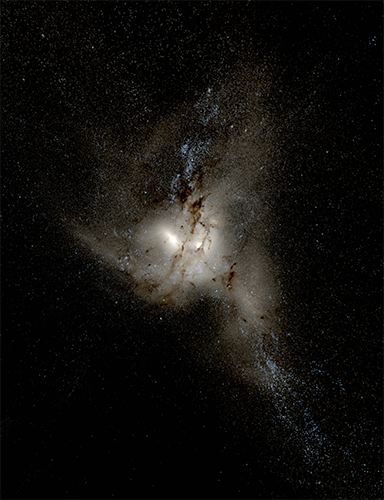 Abstract:
A complete theory of galaxy formation requires understanding the details of how gas is converted into stars over cosmic time, which is affected by gas supply, star formation, and feedback-driven outflows. I will present a physical picture for galaxy formation that exhibits two distinct phases: at high redshift, stellar feedback causes all star-forming galaxies to undergo rapid fluctuations in their star formation rates on ~10-Myr timescales. Bursts of star formation are followed by strong outflows, which cause the star formation rate to drop precipitously. Fresh gas supply from galactic fountains rejuvenates star formation and restarts the cycle. At z ~ 1, simulations of massive galaxies exhibit a qualitative transition: outflows are no longer driven effectively, and the galaxies transition to steadily star-forming, well-order disk galaxies. I will discuss the physical causes of bursty star formation and the aforementioned transition to time-steady star formation, in addition to some implications for JWST observations of high-redshift galaxies.
Abstract:
A complete theory of galaxy formation requires understanding the details of how gas is converted into stars over cosmic time, which is affected by gas supply, star formation, and feedback-driven outflows. I will present a physical picture for galaxy formation that exhibits two distinct phases: at high redshift, stellar feedback causes all star-forming galaxies to undergo rapid fluctuations in their star formation rates on ~10-Myr timescales. Bursts of star formation are followed by strong outflows, which cause the star formation rate to drop precipitously. Fresh gas supply from galactic fountains rejuvenates star formation and restarts the cycle. At z ~ 1, simulations of massive galaxies exhibit a qualitative transition: outflows are no longer driven effectively, and the galaxies transition to steadily star-forming, well-order disk galaxies. I will discuss the physical causes of bursty star formation and the aforementioned transition to time-steady star formation, in addition to some implications for JWST observations of high-redshift galaxies.
February 26, 2025
Ray Jayawardhana (Johns Hopkins University)
Exploring Planetary-Mass Brown Dwarfs in Young Star Clusters with JWST
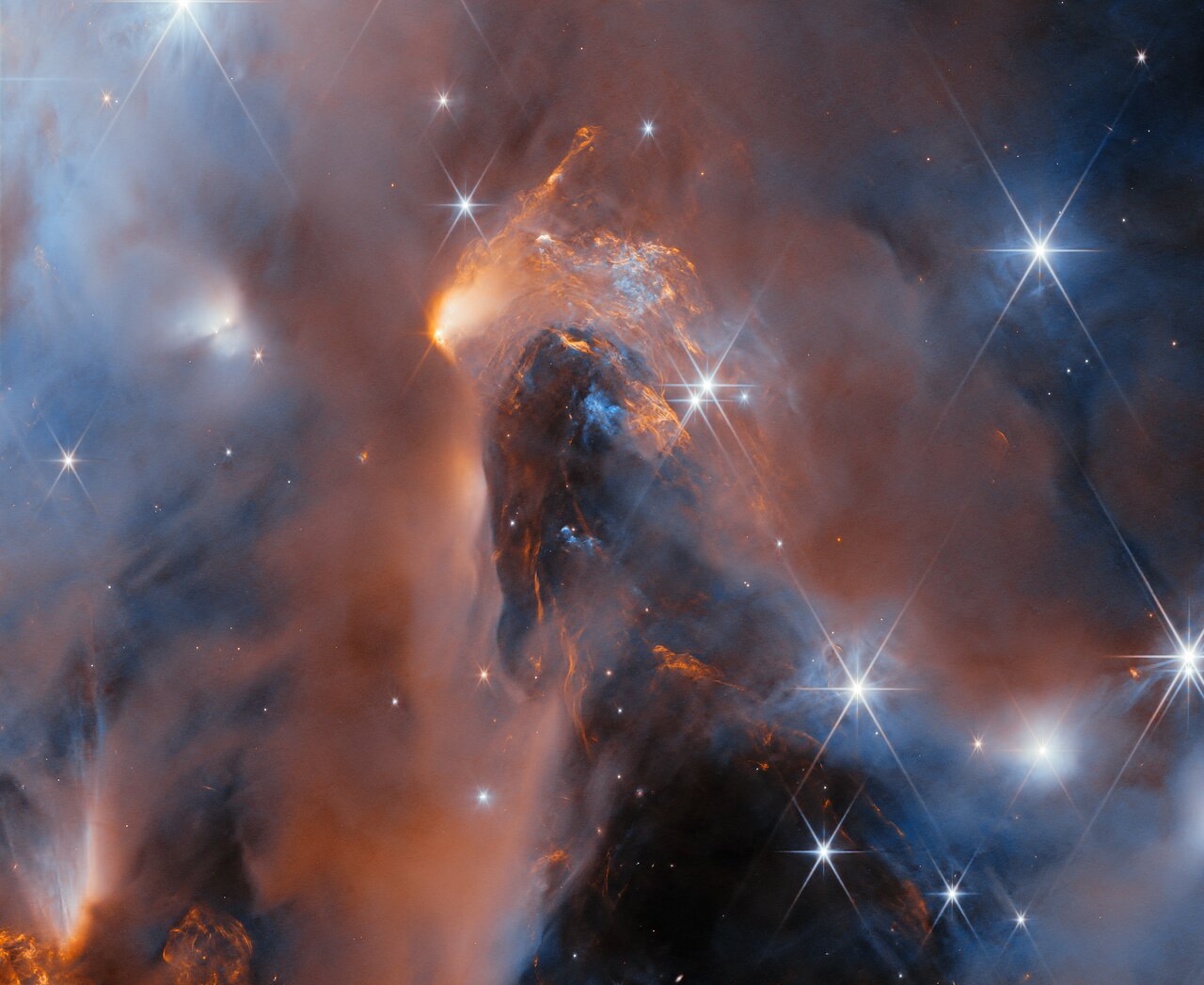 Abstract: The discovery and characterization of free-floating planetary-mass objects (FFPMOs) is fundamental to our understanding of star and planet formation. The James Webb Space Telescope affords the opportunity to search for objects down to the opacity limit for fragmentation in nearby star-forming regions. We have conducted an extremely deep spectroscopic survey of the young star cluster NGC1333, using the NIRISS instrument on the JWST. The observations cover 19 known brown dwarfs, for most of which we confirm spectral types using NIRISS spectra. We discover six new candidates with L-dwarf spectral types that are plausible planetary-mass members of the cluster, with estimated masses between 5-15 times that of Jupiter. One, at 5 Jupiter masses, shows clear infrared excess emission and is a good candidate to be the lowest mass object known to have a disk. We do not find any objects later than mid-L spectral type. Our findings put the fraction of FFPMOs in NGC1333 at ~10 % of the number of cluster members. The paucity of ~Jupiter-mass objects, despite the survey’s unprecedented sensitivity, suggests that our observations reach the lowest mass objects formed like stars in NGC1333. We also search for wide binaries in our images and find a young brown dwarf with a planetary-mass companion. I will compare our results for NGC1333 with those reported recently for a few other regions. Finally, I will preview our on-going JWST program aimed at characterizing a sample of FFPMOs with indications of disks.
March 5, 2025
Harley Katz (University of Chicago)
The Extreme Nature of Galaxies and Stellar Populations at Cosmic Dawn
 Abstract: The few years of JWST observations have revealed numerous anomalies at high-redshift such as an unexpected excess of bright galaxies at z>9, peculiar chemical abundance patterns, extreme interstellar medium temperatures, and a population of very early quenched galaxies. These observations have challenged our most state-of-the-art simulations and models of early galaxy formation. In this talk I will highlight the discrepancies between current theory and observations and discuss what physics may need to change to reconcile these surprising results with our understanding of galaxy formation and evolution in the first Gyr.
Fall 2024
October 2, 2024
Jason Rhodes (JPL Nasa)
Mapping the Dark Universe with Euclid

 Abstract: After 2 decades of preparation, the European Space Agency’s Euclid space telescope was launched on July 1, 2023. Euclid’s primary goal is to study the dark universe and help us better understand the enigmatic dark matter and dark energy that make up the bulk of the universe. I will talk about my personal journey in bringing Euclid to fruition, give the details of the Euclid telescope and instruments that make it so powerful as a dark energy probe, and talk about the science (cosmology and other) that will be enabled by Euclid’s deep (50 square degrees) and wide (14,000 square degrees) sky surveys. I will also talk about the time scale for Euclid data to become available to the worldwide astronomical community.
October 9, 2024
Sofia Rojas Ruiz (UCLA)
The BoRG-JWST survey on Spectroscopically-confirmed UV-Bright Galaxies at z = 7 - 9 selected from Independent Sight Lines
 Abstract: Quantifying the abundance and properties of bright galaxies in the early universe is essential to study galaxy formation and evolution since cosmic dawn. To study a statistically robust sample of galaxies against cosmic variance in the early universe, we selected bright galaxies in over 200 independent sight lines with HST imaging from the Brightest of Reionizing Galaxies Survey (BoRG). We then used JWST/NIRSpec PRISM observations to spectroscopically confirm the redshift of these bright (M_UV ≲ −20 mag) galaxies and characterize their properties from their rest-frame UV-to-optical spectral features. In this talk, I will introduce the key science questions we are addressing with this BoRG-JWST survey and will focus on the discoveries from studying the abundance and mass-to-light (M/L) ratio of z=7-9 galaxies in the survey. We are able to constrain, for the first time, the bright end of the rest-UV luminosity function (UVLF) at z~8 from spectroscopically-confirmed galaxies over eight independent fields. We find that the number density is higher than found using imaging over JWST legacy fields, suggesting the latter may be significantly affected by cosmic variance, and thus reducing the tension with recent findings from JWST at z > 10 and comparable to models invoking little dust attenuation and bursty star formation. We also use the spectra of these galaxies to infer their stellar masses and M/L ratios relative to other HST and JWST studies. We show that the stellar mass scales almost linearly with UV luminosity, albeit intrinsic scatter, consistent with stochastic bursts of star formation in early galaxy formation.
October 16, 2024
JWST deadline, no colloquium
October 23, 2024
Zoltan Haiman (Columbia University)
Gravitational wave and electromagnetic signatures of binary black holes with circumbinary gas
 Abstract: Binary black holes (BHBs) embedded in dense gas hold the
promise of so-called "multi-messenger astrophysics": when they are
detected both through gravitational waves (GWs) and electromagnetic
(EM) observations, they will enable novel science. This is true both
for massive BHBs, whose GWs will be detectable by the future LISA
satellite and by on-going pulsar timing arrays (PTAs), as well as for
stellar-mass BHBs detected through ground-based GW detectors. In both
cases, identifying the coalescing binaries through their EM signatures
will help clarify their astrophysical origin and yield novel probes of
cosmology, fundamental physics, and accretion physics. In this talk,
I will describe how circumbinary gas may produce characteristic EM
signatures for both massive and stellar-mass BHBs, based on analytic
models as well as hydrodynamical simulations. I will also argue that
in both cases, some coalescing binaries may have already been detected
in optical surveys, providing clues about their origin.
Abstract: Binary black holes (BHBs) embedded in dense gas hold the
promise of so-called "multi-messenger astrophysics": when they are
detected both through gravitational waves (GWs) and electromagnetic
(EM) observations, they will enable novel science. This is true both
for massive BHBs, whose GWs will be detectable by the future LISA
satellite and by on-going pulsar timing arrays (PTAs), as well as for
stellar-mass BHBs detected through ground-based GW detectors. In both
cases, identifying the coalescing binaries through their EM signatures
will help clarify their astrophysical origin and yield novel probes of
cosmology, fundamental physics, and accretion physics. In this talk,
I will describe how circumbinary gas may produce characteristic EM
signatures for both massive and stellar-mass BHBs, based on analytic
models as well as hydrodynamical simulations. I will also argue that
in both cases, some coalescing binaries may have already been detected
in optical surveys, providing clues about their origin.
October 30, 2024
Tod Lauer (Noirlab)
How Dark is Space?
 Abstract: We used NASA’s New Horizons spacecraft to measure the cosmic optical background (COB) intensity integrated over 0.4 ≲ λ ≲ 0.9 μm. The survey comprises 16 high Galactic-latitude fields. Images were obtained with the LORRI camera when New Horizons was 57 AU distant from the Sun. As such, the sky intensity measurements were unaffected by zodiacal light, which strongly interferes with COB measurements attempted from the inner solar system. The survey yields a highly significant detection (6.8σ) of the COB at 11.16 ± 1.65 (1.47 sys, 0.75 ran) nW m‾² sr‾¹ at the LORRI pivot wavelength of 0.608 μm. The estimated integrated intensity from background galaxies, 8.17 ± 1.18 nW m‾² sr‾¹, can account for the great majority of this signal. The rest of the COB signal is formally classified as anomalous intensity but is not significantly different from zero. The simplest interpretation is that the COB is completely due to galaxies.
November 6, 2024
AstroBash - No colloq
November 13, 2024
Vicky Kaspi
The Mystery of Fast Radio Bursts
Fast Radio Bursts are a recently discovered phenomenon consisting of brief (typically few millisecond) bursts of radio waves coming from far outside our Milky Way galaxy, indeed from cosmological distances. Their origin is unknown. I will review what is known about these mysterious sources, and how they can act as novel probes of the matter distribution in the Universe. I will focus on results from the CHIME Fast Radio Burst Project, which uses a new Canadian digital radio telescope that is revolutionizing our view of the fast transient sky. I will also introduce the CHIME/FRB Outriggers, which will enable precise sky localizations for >1000 CHIME FRBs, hence permit host galaxy ID and redshift determinations.
November 20, 2024
No colloquium
November 27, 2024
Thanksgiving - No colloquium
December 4, 2024
Debra Fischer
Spring 2024
April 10, 2024
Suvi Gezari (Space Telescope Science Institute)
Searching for the Tidal Disruption of Stars Across the Black Hole Mass Function over Cosmic Time
 Abstract: The tidal disruption of a star that wanders too close to a central black hole is a unique probe of quiescent supermassive black holes lurking in the nuclei of galaxies. Over the last 5 years, we have demonstrated the ability to discover and spectroscopically classify large samples of tidal disruption events (TDEs) in the optical from the Zwicky Transient Facility (ZTF) Northern Sky Survey, with systematic high-energy follow-up with Swift and XMM-Newton. One of the most exciting applications of TDEs is the ability to probe intermediate mass black holes (IMBHs) that are expected to reside in dwarf galaxies, with a black hole occupation fraction that depends on the nature of primordial seed black holes in the early Universe. One novel way to probe IMBHs is to catch them in the act of tidally disrupting and accreting a white dwarf. White dwarfs (WDs) are so dense, that they can only be ripped apart outside the event horizon around an IMBH sized black hole. Furthermore, there is a theoretical prediction for a radioactively powered thermonuclear explosion at the time of maximum compression of the star as it passes through pericenter, that could be strong enough to ignite thermonuclear runaway, and a peculiar Type Ia like explosion. I will present our strategy for searching for TDEs across the black hole mass function over cosmic time in the next 5 years, by extending our sensitivity to TDEs to lower central black hole masses and higher redshifts, by exploiting the discovery power of the next generation of time domain surveys, including Rubin, Roman, ULTRASAT, and UVEX.
April 17, 2024
Kate Whitaker (University of Massachusetts)
Unveiling the Epoch of Quenching

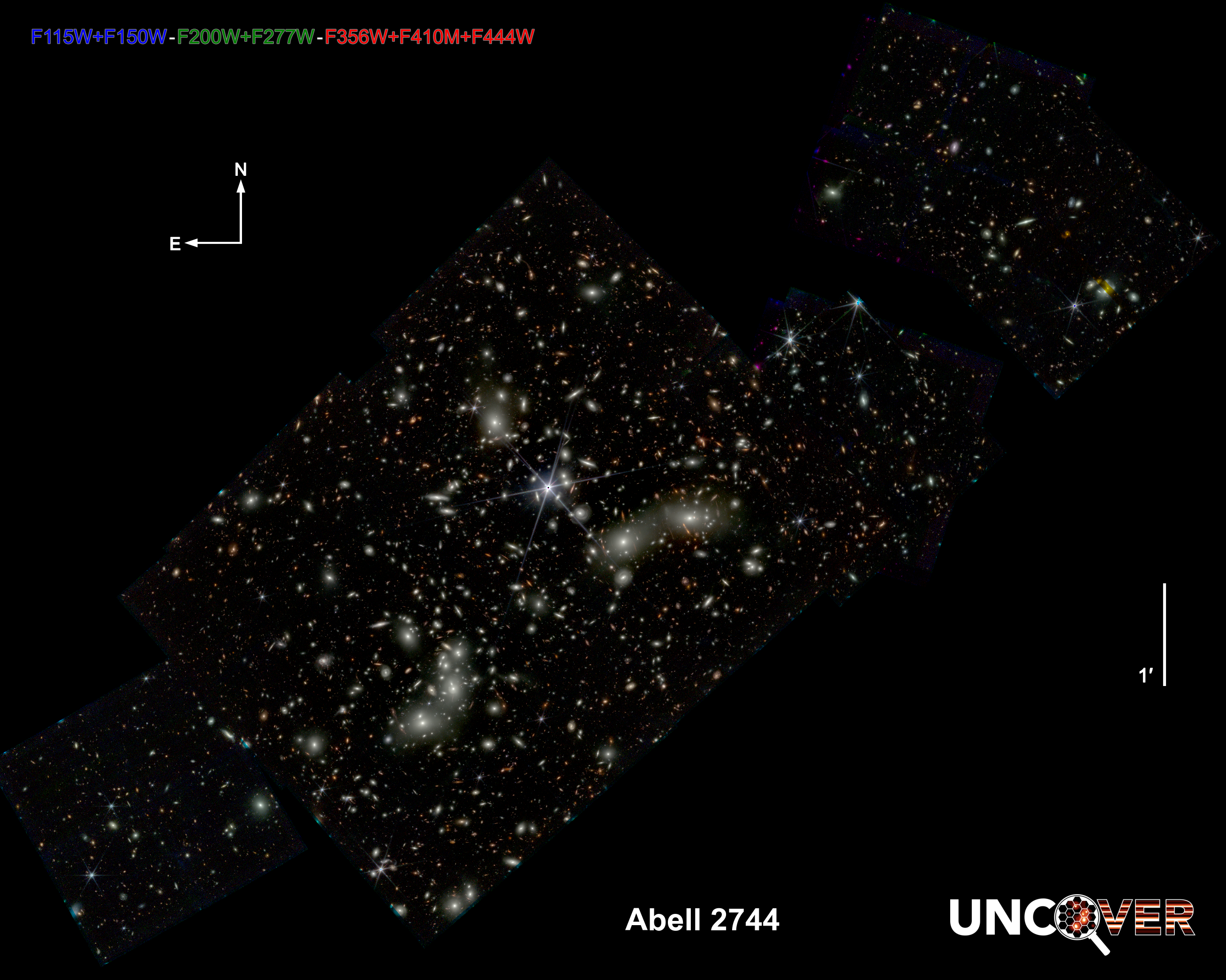 Abstract: When the Universe was merely a few billion years old, about half of massive galaxies had already formed the bulk of their stars and
new star formation plummeted. New observations from the James Webb
Space Telescope are now pushing the existence of these ‘red and dead’
(quiescent) galaxies to uncomfortably high redshifts. How these massive
galaxies form so rapidly and quench at such early times remains a
puzzle. Their dark matter halos should contain large gas reservoirs
that should cool efficiently, sustaining star formation over long
periods. In this talk, I will review the recent innovative techniques
developed to probe the physical properties of early quiescent galaxies,
and the key observations constraining their formation histories. I will
present promising paths forward towards solving this puzzle that
leverage strong gravitational lensing and the capabilities of the James
Webb Space Telescope and ALMA.
Abstract: When the Universe was merely a few billion years old, about half of massive galaxies had already formed the bulk of their stars and
new star formation plummeted. New observations from the James Webb
Space Telescope are now pushing the existence of these ‘red and dead’
(quiescent) galaxies to uncomfortably high redshifts. How these massive
galaxies form so rapidly and quench at such early times remains a
puzzle. Their dark matter halos should contain large gas reservoirs
that should cool efficiently, sustaining star formation over long
periods. In this talk, I will review the recent innovative techniques
developed to probe the physical properties of early quiescent galaxies,
and the key observations constraining their formation histories. I will
present promising paths forward towards solving this puzzle that
leverage strong gravitational lensing and the capabilities of the James
Webb Space Telescope and ALMA.
April 24, 2024
Itai Linial (Columbia University)
Stellar Destruction near Massive Black Holes and Quasi-Periodic Eruptions
 Abstract: Centers of galaxies are fertile environments for a variety of dynamical processes, owing to the high density of stars and the presence of a central Super-massive Black Hole (SMBH). I will introduce two main channels of stellar destruction caused by interaction with the central SMBH: Stars may be deflected onto a nearly radial trajectory where they are ripped apart by the SMBH’s tidal field, producing a luminous flare powered by the rapid fallback of stellar debris (known as Tidal Disruption Event, TDE), or alternatively, they may inspiral towards the SMBH on a nearly circular orbit until they begin to gradually shed their mass over many orbits (Extreme Mass Ratio Inspiral, EMRI). I will discuss the possible connection between these phenomena and a newly discovered class of repeating X-ray flares occurring in galactic nuclei, known as Quasi-Periodic Eruptions (QPEs). I will present a theoretical model for explaining the observations, involving a stellar EMRI interacting with the accretion flow produced by a recent TDE in the same galactic center. I will conclude by discussing the potential of QPEs and other repeating transients in galactic nuclei in testing our theoretical understanding of SMBHs and their environments - including measurements of their masses and spins, probing the nature of the accretion flow that forms around them, and constraining the dynamical processes that govern their engulfing stellar clusters.
May 22, 2024
Brant Robertson (UCSC)
Finding the most distant galaxies in the universe with JWST
Abstract: James Webb Space Telescope (JWST) has opened a new window into the early universe, enabling sensitive, high-resolution images of the near-infrared sky and spectroscopy of faint, distant sources. The JWST Advanced Deep Extragalactic Survey (JADES) is a collaboration of the NIRCam and NIRSpec GTO teams pooling over 750 hours of JWST time to conduct an ambitious study of galaxy evolution in the Great Observatories Origins Deep Survey GOODS-South and GOODS-North fields. I will discuss exciting results from JADES observations about discoveries in the distant (z>10!) universe that provide new insight into the process of early galaxy formation and cosmic reionization. We discuss how our new constraints on star formation and galaxy growth at the very earliest times are rewriting the story of how the first galaxies form and evolve.
May 29, 2024
Chris Hayward (Flatiron Institute, New York)
Bursty star formation: physical drivers and implications for JWST observations of high-redshift galaxies
Abstract: A complete theory of galaxy formation requires understanding the details of how gas is converted into stars over cosmic time, which is affected by gas supply, star formation, and feedback-driven outflows. I will present a physical picture for galaxy formation that exhibits two distinct phases: at high redshift, stellar feedback causes all star-forming galaxies to undergo rapid fluctuations in their star formation rates on ~10-Myr timescales. Bursts of star formation are followed by strong outflows, which cause the star formation rate to drop precipitously. Fresh gas supply from galactic fountains rejuvenates star formation and restarts the cycle. At z ~ 1, simulations of massive galaxies exhibit a qualitative transition: outflows are no longer driven effectively, and the galaxies transition to steadily star-forming, well-order disk galaxies. I will discuss the physical causes of bursty star formation and the aforementioned transition to time-steady star formation, in addition to some implications for JWST observations of high-redshift galaxies.
June 5, 2024
Zoltan Haiman (Columbia University)
Gravitational wave and electromagnetic signatures of binary black holes with circumbinary gas
Abstract: Binary black holes (BHBs) embedded in dense gas hold the promise of so-called "multi-messenger astrophysics": when they are detected both through gravitational waves (GWs) and electromagnetic
(EM) observations, they will enable novel science. This is true both
for massive BHBs, whose GWs will be detectable by the future LISA
satellite and by on-going pulsar timing arrays (PTAs), as well as for
stellar-mass BHBs detected through ground-based GW detectors. In both
cases, identifying the coalescing binaries through their EM signatures
will help clarify their astrophysical origin and yield novel probes of
cosmology, fundamental physics, and accretion physics. In this talk,
I will describe how circumbinary gas may produce characteristic EM
signatures for both massive and stellar-mass BHBs, based on analytic
models as well as hydrodynamical simulations. I will also argue that
in both cases, some coalescing binaries may have already been detected
in optical surveys, providing clues about their origin.
January 10,2024
AAS meeting, no colloquium
January 17, 2024
Ashley Villar (Center for Astrophysics | Harvard & Smithsonian (CfA))
Time-domain Astrophysics in the Era of Big Data
Abstract: The eruptions, collisions and explosions of stars drive the universe’s chemical and dynamical evolution. The upcoming Legacy Survey of Space and Time will drastically increase the discovery rate of these transient phenomena, bringing time-domain astrophysics into the realm of “big data.” With this transition comes the important question: how do we classify transient events and separate the interesting “needles” from the “haystack” of objects? In this talk, I will discuss efforts to discover and classify unexpected phenomena using semi-supervised machine learning techniques. I will highlight the interplay between data-informed physics and physics-informed machine learning required to best understand the future LSST dataset of extragalactic transients.
January 24, 2024
Lieke van Son (Center for Astrophysics | Harvard & Smithsonian (CfA))
The first pieces of the gravitational-wave progenitor population puzzle
 Abstract: As the gravitational-wave event catalog has grown from O(10) to O(100), the field of gravitational-wave astronomy has been rapidly unfolding. We are moving from a phase of initial discovery into an era of population studies. The hope is that these observations help place new constraints on the otherwise elusive lives and deaths of massive stars throughout cosmic history. I will discuss how the first pieces of the gravitational-wave progenitor population puzzle have helped us so far to form a picture of their massive stellar ancestors. Additionally, I will touch upon some of the hopes but also pitfalls of population studies and discuss why the coming decades will be particularly exciting.
February 14, 2024
Re'em Sari (Racah Institute of Physics, The Hebrew University of Jerusalem)
Stellar Processes Around Supermassive Black Holes in Galactic Centers.
Most galaxies contain a super massive black hole at their centers, with masses of millions to billions times that of our sun. This gigantic mass reshapes the orbits of stars and stellar mass black holes around it. We discuss the processes which determine the stellar distribution around supermassive black holes, and derive their statistical equilibrium state. We show how these relate to extreme events, observable from our own galactic center as well as other galactic centers in the universe. These include gravitational waves in the LISA band, tidal disruption of stars, ejection of hypervelocity stars, stable mass transfer onto the supermassive black hole and mysterious pulses of x-rays known as Quasi Periodic Eruptions.
February 21, 2024
Maura McLaughlin (West Virginia University)
Pulsar Timing Arrays: A New Window on the Gravitational Wave Universe
 Abstract: Millisecond pulsars are rapidly rotating neutron stars with phenomenal rotational stability. Pulsar timing arrays world-wide monitor over 100 of these cosmic clocks in order to search for perturbations due to gravitational waves at nanohertz frequencies. The tell-tale sign of a stochastic background of gravitational waves in pulsar timing data is the presence of quadrupolar spatial correlations. Recently, and for the first time ever, pulsar timing array collaborations have found evidence of these spatial correlations in multiple independent pulsar datasets. The signal is consistent with that expected from an ensemble of supermassive black hole binaries, but could also be attributable to more exotic sources, such as cosmic strings or early universe inflation. I will describe these experiments and the most recent results, in particular highlighting those from the NANOGrav collaboration, and will discuss the increases in sensitivity expected from the combination of data observed with new and existing telescopes across the globe.
February 28, 2024
Shep Doeleman (Center for Astrophysics | Harvard & Smithsonian (CfA))
The next-generation Event Horizon Telescope: from Still Images to Video

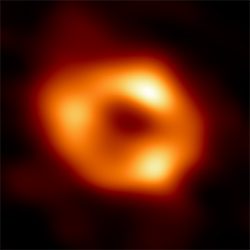 Abstract: The next-generation Event Horizon Telescope (ngEHT) is a transformative upgrade to the EHT that will realize black hole “cinema”: real-time and time-lapse movies of supermassive black holes on event horizon scales. These movies will resolve complex structure and dynamics on Schwarzschild radius dimensions, bringing into focus not just the persistent strong-field gravity features predicted by General Relativity (GR), but details of active accretion and relativistic jet launching that drive large scale structure in the Universe. This effort builds upon recent results by the Event Horizon Telescope (EHT): the first image of M87’s supermassive black hole and its magnetic field structure, as well as resolved images of SgrA*, the central black hole at the heart of the Milky Way. These images are scientifically rich, and show that evolution of the EHT to a more capable array can address even deeper questions across physics and astronomy. The central concept behind the ngEHT is that the addition of modest-diameter dishes at new geographic locations and multi-color observations over a range of frequencies will enable the next revolution in horizon-resolved black hole studies. This talk will cover the ngEHT technical plans and scientific goals.
March 6, 2024
Fabio Pacucci (Center for Astrophysics | Harvard & Smithsonian (CfA))
Searching for Black Holes From the Nearby to the Faraway Universe
 Abstract: I will provide an overview of our quest to explore undetected populations of black holes, proceeding from the nearby to the faraway Universe. First, I will unveil a new multiwavelength observational campaign leading to discovering the second closest supermassive black hole in the Milky Way satellite Leo I. I will then describe the properties of intermediate-mass black holes potentially wandering in local galaxies, including in the Milky Way. Moving higher in the redshift ladder, I will detail the detection of the farthest lensed quasar to date and investigate why we may be missing a significant fraction of this population. Furthermore, based on JWST data of galaxies hosting black holes at z>4, I will present a statistical analysis that reveals a high-z M_bh-M_star relation that deviates significantly from the local relation. Black holes are overmassive by 10-100 times compared to their low-z counterparts; this fact is not due to a selection effect. I will present a simple model to explain these observations and discuss their significance for black hole seeds. I will then conclude with the observational properties of the first population of black holes, formed at z ~ 20-30, and how we may soon detect them directly.
March 13, 2024
Jorge G. Moreno Soto (Pomona College)
The intriguing lives of galaxies lacking dark matter

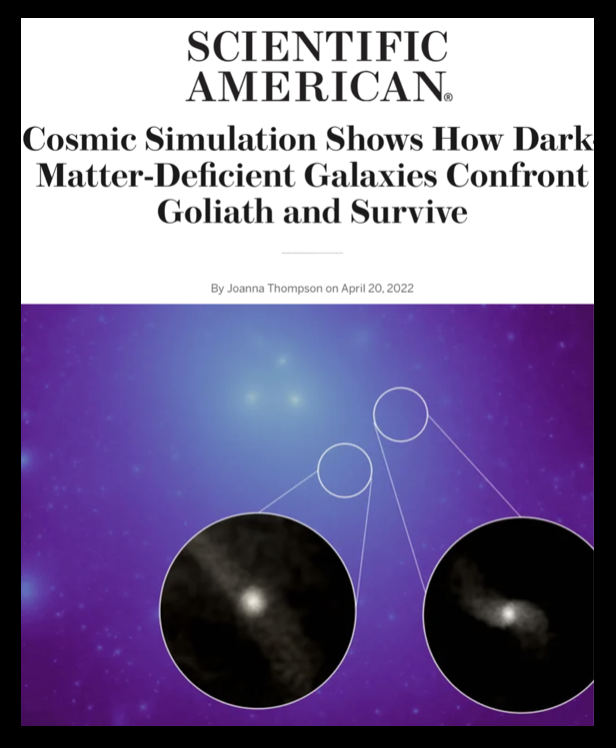 Abstract: The standard cold dark matter plus cosmological constant model predicts that galaxies form within dark-matter haloes, and that low-mass galaxies are more dark-matter dominated than massive ones. The unexpected discovery of two low-mass galaxies lacking dark matter immediately provoked concerns about the standard cosmology and ignited explorations of alternatives, including self-interacting dark matter and modified gravity. Apprehension grew after several cosmological simulations using the conventional model failed to form adequate numerical analogues with comparable internal characteristics (stellar masses, sizes, velocity dispersions and Sérsic indices). Here we show that the standard paradigm naturally produces galaxies lacking dark matter with internal characteristics in agreement with observations. Using a state-of-the-art cosmological simulation and a meticulous galaxy-identification technique, we find that extreme close encounters with massive neighbours can be responsible for this. Moreover, these encounters occur when the satellite is still gas-rich, suggesting that gas-rich interactions may explain the peculiar globular cluster populations in these galaxies. We predict that ∼30% of massive central galaxies (with at least 10e11 solar masses in stars) harbour at least one dark-matter-deficient satellite (with 10e8 -10e9 solar masses in stars). This distinctive class of galaxies provides an additional layer in understanding how tidal stripping and star formation triggering unfolds under these extreme conditions. Future observations surveying galaxies in the aforementioned regime will provide a crucial test of this scenario.
Fall 2023
October 4, Jia Liu (University of Tokyo)
Cosmology with Massive Neutrinos
 Bio: Jia Liu (https://liuxx479.github.io/) is a computational and observational cosmologist. Liu is an associate professor at Kavli IPMU in the University of Tokyo and the inaugural director of the newly established Center for Data-Driven Discovery (CD3) at Kavli IPMU. Liu received her PhD from Columbia University in 2016, was an NSF postdoctoral fellow at Princeton (2016-2019) and a BCCP postdoctoral fellow at UC Berkeley (2019-2021).
Abstract: Ghostly neutrino particles continue to bring surprises to fundamental physics, from their existence to the phenomenon of neutrino oscillation, which implies their nonzero masses. Their exact masses, among the most curious unknowns beyond the Standard Model of particle physics, can soon be probed by the joint analysis of ongoing and upcoming cosmological surveys including Rubin LSST, Euclid, Roman, DESI, PFS, Simons Observatory, CMB-S4, and LiteBRID. In this talk, I will discuss ongoing works studying the effects of massive neutrinos and will draw a roadmap towards discovering the neutrino mass over the next decade.
October 11, no colloquuim
October 18, no colloquuim
October 25, Catherine Zucker (Smithsonian Astrophysical Observatory Center for Astrophysics | Harvard & Smithsonian)
Tracing Star Formation Across Scales: A Case Study in the Solar Neighborhood
Abstract: The processes regulating star formation in galaxies act across many orders of magnitude in spatial scale. Thus, a key challenge in understanding star formation is bridging the small-scale physics within molecular clouds and the large-scale structure of spiral galaxies. Fully constraining the physics of star formation across these scales requires constraints on both the 3D spatial structure and dynamical state of the interstellar medium (ISM), the combination of which has been an essentially unknown quantity in the field of star formation research. In this talk, I will discuss ongoing efforts to construct high-dimensional models of the ISM in the solar neighborhood by combining data science and visualization techniques with wide-field photometric, astrometric, and spectroscopic surveys. On kiloparsec scales, I will discuss how "3D dust mapping" has enabled constraints on the global distribution of molecular clouds, revealing new links between clouds long thought to be isolated and challenging fundamental assumptions about the shape and position of a nearby spiral arm. On parsec scales, I will show how combining 3D dust mapping with the 3D space motions of young stars can explain the origin of all local star formation as being driven by the expansion of the Local Bubble, the nearest superbubble to the Sun. Finally, on au-scales, I will discuss the implications that the Sun’s trajectory through the ISM has for the properties of the heliosphere and the geological record here on Earth. I will conclude by previewing the opportunities enabled by future infrared surveys, including SDSS-V and Roman, which together will pave the way for a unified understanding of the multi-scale physical processes shaping star formation in diverse environments across the Milky Way’s disk.
November 1, Mattia Sormani (University of Surrey)
The Galactic centre on “large” scales
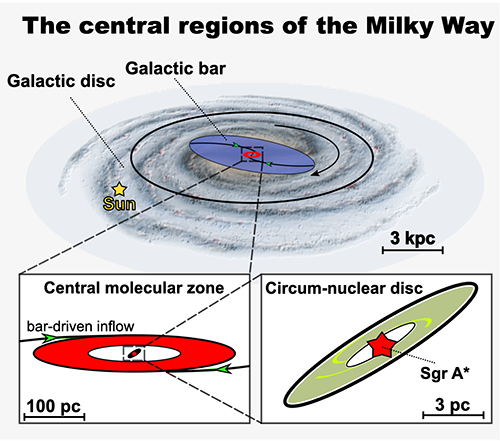
Abstract: I will give an introduction to the structure, dynamics and star formation in the central 3 kpc of the Milky Way. This region hosts a complex dynamical ecosystem that is continually exchanging matter with the rest of the Galaxy through inflows and outflows. The Galactic bar efficiently transports gas from the Galactic disc towards the centre at a rate of ~1 Msun/yr, creating a ring-like accumulation of molecular gas known as the Central Molecular Zone (CMZ) at a radius R=120pc. The CMZ is the local analog of the star-forming nuclear rings commonly found at the centre of external barred galaxies. Once in the ring, approximately 10% of the gas is consumed by intense star formation activity. Star formation does not occur uniformly throughout the CMZ ring, but is more likely to occur near the sites where the bar-driven inflow is deposited. The star formation rate of the CMZ varies as a function of time, but it is currently debated whether this is due to an internal feedback cycle or to external variations in the bar-driven inflow rate. The radius of the CMZ gas ring slowly grows over Gyr timescales, and its star formation activity builds up a flattened stellar system known as the nuclear stellar disc, which currently dominates the gravitational potential of the Milky Way at 30pc<R<300pc. Most of the gas not consumed by star formation in the CMZ is ejected perpendicularly to the plane by a Galactic outflow powered either by stellar feedback and/or AGN activity, while a tiny fraction continues moving radially inward towards the circum-nuclear disc at R=few pc, and eventually into the sphere of influence of the central black hole SgrA* at R<1pc.
November 8, Lisa Kewley (Center for Astrophysics | Harvard & Smithsonian)
A new vision for the Center for Astrophysics | Harvard & Smithsonian

Abstract: I will present the latest discoveries and developments at the Center for Astrophysics | Harvard & Smithsonian (CfA). Our discoveries cover solar astrophysics, star formation and evolution, galaxy formation & evolution, extrasolar planets, black holes, and cosmology. I will describe the latest ground and space-based technological developments at the CfA, including new space satellites, and compelling new instrumentation for current and future ground-based telescopes in the optical, infrared, IR, and X-rays, as well as for climate science. I will discuss our challenges with Petabyte scale datasets and the application of AI to astronomical problems. Finally, I will provide an overview of the diversity, inclusion and culture initiatives that are being implemented at the CfA, using evidence-based studies from the literature.
November 15, Caitlin Casey (UT, Austin)
Formed too Fast: Massive Galaxies at Cosmic Dawn
Abstract: The pace of galaxy growth in the early Universe offers one of the most accessible tests of the Lambda-CDM cosmological framework. A growing number of surprisingly massive galaxies are now being found in the first billion years after the Big Bang that push the limits of theoretical predictions. Unusually bright high-redshift galaxies discovered by JWST challenge our most fundamental models of how fast stars form. Some of them contain overly massive black holes whose formation is uncharted. Massive dusty starbursts found with ALMA are requiring new explanations about early dust production. The spatial distribution of massive galaxies within large scale structure may be more highly clustered than expected, which would impact the timescale and uniformity of reionization — the last major phase change of the Universe from a neutral to ionized medium. I will present an overview of large, multi-wavelength observational campaigns I lead to place the first comprehensive constraints on the rarest, most massive galaxies to emerge at z>6 and the impact they in turn have on our interpretations of the early Universe. These efforts unite the unprecedented sensitivity of JWST together with ALMA and Keck to work towards the goal of definitively establishing the story of how and when the first galaxies assembled.
November 22, no Colloquium
November 29, Robert Kirshner (TMT International Observatory)
New Paths to Dark Energy: Today with HST and Tomorrow with the TMT

Brief Bio Robert Kirshner is the Executive Director of the Thirty Meter Telescope International Observatory.. A 1970 graduate of Harvard College, he received a Ph.D. from Caltech, was a postdoc at the Kitt Peak National Observatory, on the faculty at the University of Michigan for 9 years, and then Professor of Astronomy at Harvard University until 2015 when he became Chief Program Officer for Science at the Gordon and Betty Moore Foundation. He started at the TIO in 2022. Kirshner is a member of the National Academy of Sciences and has received the NAS James Craig Watson Medal for outstanding contributions to the science of astronomy. He served as President of the American Astronomical Society and received the 2015 Wolf Prize in Physics "for forging the path to supernova cosmology". He is a co-author of 407 refereed publications that have been cited 69,804 times. His popular-level book "The Extravagant Universe: Exploding Stars, Dark Energy, and the Accelerating Universe" is available in English, Spanish, Portuguese, Japanese, Chinese, and Czech.
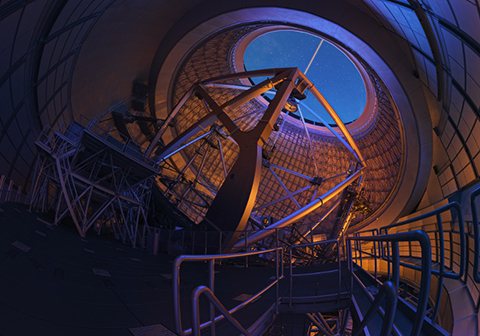
Abstract: As with most advances in astronomy since Galileo's time, the 1998 path to the discovery of cosmic acceleration was paved with technological innovation. The present state-of-the-art for supernova-based constraints on the dark energy that drives the acceleration has been advanced by large samples and, as I will describe, observations in the rest frame infrared with HST. Is the dark energy the cosmological constant or something different? Better evidence from exploding white dwarfs will flow from infrared observations made with the Roman Space Telescope. As Astro2020 noted, in the decades to come, a wide swath of advances in exoplanets, black holes, dark energy, and galaxy evolution will come from the Thirty Meter Telescope, in which the University of California is an essential partner. I will provide an overview of the TMT and its present status: technical, programmatic, and progress on building a community-based model for stewardship of the proposed site on Maunakea. We have been a lightning rod for protest; we aspire to be a catalyst for change.
December 6, Jonathon Zink (Caltech)
Exoplanets in the Galaxy

Abstract: The quest to understand the vast expanse of our galaxy and the multitude of planetary systems it hosts has led to groundbreaking discoveries in the field of exoplanetary science. The Scaling K2 collaboration embarked on a journey that has produced the only homogeneous sample of exoplanets observed by K2, the follow-on mission to well-characterized Kepler transit survey. This comprehensive catalog has not only expanded the inventory of known exoplanets, but also broadened our perspective on galactic latitudes, stellar ages, masses, and metallicities. I will provide an overview of the recent findings from this project and the implications for planet formation and dynamics. In addition, the nearly 30 year radial velocity baseline of the California Legacy Survey has enabled demographic analysis of planets both within and beyond each respective system's ice line. I will present our recent work unveiling the architectural characteristics that give rise to the enigmatic planet class of hot Jupiters. Overall, our findings challenge existing paradigms and propel us closer to unraveling the complex tapestry of planetary systems across the galaxy.
Spring 2023
April 5, Anna Rosen (University of California, San Diego)
A Massive Star is Born: How Stellar Feedback Limits Accretion onto Massive Stars
Abstract: Massive stars play an essential role in the Universe. They are rare, yet the energy and momentum they inject into the interstellar medium (ISM) with their intense radiation fields and fast, isotropic radiatively-driven winds dwarfs the contribution by their vastly more numerous low-mass cousins. This stellar feedback influences star and galaxy formation, and drives the dynamical and chemical evolution of galaxies. Massive stars form from the gravitational collapse of magnetized, dense, and turbulent molecular gas located within Giant Molecular Clouds (GMCs). Feedback from massive stars’ radiation fields, collimated protostellar outflows, and stellar winds may limit their growth by accretion, necessitating detailed radiation magnetohydrodynamic (RMHD) simulations to understand how these processes may impact their formation. In this talk, I will present results from a series of RMHD simulations modeling the formation of massive stars and show that stellar feedback can quench accretion onto ~30 Msun stars that form in isolation. My results imply that stars more massive than this must form via large-scale, high ram-pressure dynamical inflows within GMCs, consistent with observations. This highlights the need for future studies to follow the gravitational collapse of GMCs in order to trace large-scale inflows to the birth sites of massive stars.
April 12, Ylva Goetberg (Carnegie)
The Discovery and Properties of Binary-stripped Helium Stars
Abstract: Massive stars stripped of their H-rich envelopes through mass transfer or common envelope ejection are thought to be the main progenitors of H-poor supernovae, to emit large amounts of hard ionizing radiation, and to constitute two necessary steps in the binary evolution pathways towards compact objects merging in gravitational wave events. Despite their importance, these stripped helium stars have remained elusive.
With new UV photometry combined with optical magnitudes, and follow-up optical spectroscopy, we identified a first sample of dozens of such stripped star systems in the Magellanic Clouds. We obtain estimates for their stellar parameters by fitting their optical spectra to a newly computed grid of helium star atmosphere models. Aligned with theoretical expectations, we find that stripped stars are hot (Teff~50-100 kK), compact (log g ~ 5), He-rich (Y_surf ~0.6-1), and H-poor (X_surf ~0-0.4). Furthermore, by matching the spectroscopic fits with the photometrical data, we find small radii (~1 Rsun), a range of luminosities (L ~ 1,000-100,000 Lsun), and masses that are sufficient to lead to core-collapse (~2-8 Msun). There are strong indications that the stellar winds are surprisingly weak, suggesting that binary-stripped helium stars are the main responsible for both IIb and Ib supernovae.
Apart from providing an observational anchor for both binary evolution models and simulations of common envelope ejection, this sample of stars prove that the full mass range of helium stars exists, forming a bridge between subdwarfs and Wolf-Rayet stars.
April 19, Lee Armus (Caltech/IPAC)
Using JWST to Study Local Luminous Infrared Galaxies: Early Release Science
Abstract: Through a combination of greatly enhanced sensitivity, together with spatial and spectral resolution, JWST is poised to transform our understanding of galactic evolution, providing a detailed look at the physics of star formation and black hole growth in nearby and distant galaxies. In Early Release Science program 1328, we are observing four nearby, Luminous Infrared Galaxies (LIRGs) selected from the Great Observatories All-sky LIRG Survey (GOALS) with NIRSPEC, NIRCAM and MIRI. These observations are generating a rich dataset for understanding the dynamics and energetics of the ISM on scalesof ~100pc in the nuclei of local LIRGs. I will describe our initial results, and prospects for future observations of dusty, merging galaxies with JWST.
April 26, Erica Nelson (CU Boulder)
The remarkable power of JWST to revolutionize our understanding of galaxy formation
Abstract: The launch and commissioning of the James Webb Space Telescope is ushering in a new era in our understanding of our cosmic origins. Galaxies are a fundamental building block of the universe, yet how they formed has remained enigmatic owing to our inability to observe them at early cosmic times. In just the first eight months of data, JWST is already revolutionizing our understanding of the early universe by allowing us to detect and resolve early galaxies at infrared wavelengths. In this talk, I will discuss some of the results that have come out of our work with JWST and their impact on our understanding of the formation and evolution of galaxies. This includes the discovery of candidate galaxies so old and massive they should not exist, the surprising shapes of HST-dark galaxies, and a new method for measuring kinematics that has revealed a monstrous spinning disk 1 billion years after the big bang. The first spatially-resolved infrared look at distant galaxies has revealed that our previous understanding of the emergence of galactic structure was faulty and requires a next-generation set of tools, which we are building. I’ll conclude with a discussion of where the field is moving and the rich discovery space in this new era of extragalactic astrophysics.
May 3, Giacomo Fragione (NU)
HIERARCHICAL BLACK HOLE MERGERS: A MULTI-BAND OPPORTUNITY FOR GRAVITATIONAL WAVES
Abstract: With about a hundred binary black hole (BBH) mergers detected via gravitational wave emission, our understanding of the darkest objects in the Universe has seen unparalleled steps forward compared to previous decades. While most of the events are expected to consist of first-generation BHs formed from the collapse of massive stars, others might be of a second or higher generation, containing the remnants of previous BH mergers. A fundamental limit for hierarchical mergers comes from the recoil kick imparted to merger remnants, which could result in the ejection from the host star cluster. However, hierarchical mergers can build up massive BHs and even form intermediate-mass black holes if the host cluster is massive and dense enough, as in nuclear star clusters and the most massive globular clusters. With their distinctive signatures of higher masses and spins, hierarchical mergers offer an unprecedented opportunity to learn about the densest systems in our Universe and to shed light on the elusive population of intermediate-mass black holes. The next years may bring hundreds of detections from hierarchical mergers with multi-band events chirping from space-based to ground-based detectors, promising a spectacular range of new science from stellar evolution to cosmology.
May 10, Merav Opher (BU)
The Sun's Trajectory in the Last 10 Million years and possible terrestrial implications on Climate and Biological Evolution
Abstract: Until recently the primary focus with respect to astronomical impacts on Earth’s climate and biota have centered around those arising from changes in the tilt of the Earth axis, spin and rotation, which not only drive seasonal change but are also implicated in shifts between arid and wet climatic regimes over periods ≥ 10,000 years, due to changes in solar insolation. The Sun moves large distances (~19pc/Myr) through the quite variable Interstellar Medium. There is geological evidence from 60Fe and 244Pu isotopes that Earth received interstellar material about 2-3 Myr ago and 7 Myr ago. These isotopes were interpreted evidence for a nearby supernova, however that has been cast into doubt. In this talk I will discuss our new research indicating the encounter of Earth with massive cold cloud in Local Ribbon of Cold Clouds, 3 Myr ago and with the edge of the Local Bubble 7 Myr ago. Both encounters shrinked the Sun’s protective bubble—the heliosphere—to within Earth’s orbit exposing Earth to a cold dense interstellar medium. Such scenario should be discussed in context with other ones proposed to explain the cooling seen by Oxygen isotopes measured in deep sea Foraminifera. I will discuss the possible terrestrial consequences to climate and to biological evolution. The exposure to a cold dense interstellar medium has implications on climate and increase radiation. Increased radiation alone could have effects on climate, organismal mutation rates, aging, and extinction rates, and thus broad patterns of diversification.
May 17, Josh Winn (Princeton)
Five Years of TESS
Abstract: The Transiting Exoplanet Survey Satellite (TESS) is NASA's ongoing mission to discover planets outside the solar system, and more generally, to explore the bright and time-variable sky. TESS uses four 10cm optical telescopes to perform precise time-series photometry over wide fields of view. In the five years since it was launched, TESS has covered nearly the entire sky, leading to the confirmation of 330 new planets and the identification of about 6000 planet candidates that are being followed up by ground-based observers. The initial goal of the TESS Mission -- to detect 50 planets smaller than Neptune and measure their masses -— was achieved in 2021, and now TESS is in an Extended Mission with broader goals. I will review the history of TESS since its inception in 2006, and the most important and interesting results that have been achieved thus far. I will also describe the characteristics of TESS data and how to use the data in your own research.
May 24, Andrew Howard (Caltech)
The Keck Planet Finder
Abstract: The Keck Planet Finder (KPF) is a new precision radial velocity instrument for the W. M. Keck Observatory that is designed to measure radial velocities with a precision of 30 cm/s to search for and characterize extrasolar planets. KPF achieved “first light” on the 10-m Keck I Telescope last fall and is starting science observations now that will push the frontier of studies of extrasolar planets. The core spectrometer in KPF covers visible wavelengths (445-870 nm) with a resolving power of 95,000. KPF’s design uses several novel techniques including a low thermal expansion material (Zerodur) in the spectrometer, an optical fiber system that slices and homogenizes the light entering the spectrometer, and a separate spectrometer at UV wavelengths to capture the Calcium H&K lines. This talk will tell the story of how KPF came to be, discuss its current status and recent results, and look forward to a path of discovery and continued improvement that has a goal of 10 cm/s precision and sensitivity to Earth-twin planets orbiting nearby stars.
May 31, Darach Watson (DAWN/University of Copenhagen)
The origin of the rapid neutron capture elements in neutron star mergers
Abstract: The processes that create the elements that make up the periodic table were laid down theoretically in the late 1950s, but the cosmic forges that actually carry out these processes have been more difficult to identify. The rapid (r) neutron capture process creates half of all the elements heavier than iron and the bulk of the heaviest elements, including almost all gold, platinum, and uranium. Its site is currently a major source of debate. I present spectroscopic evidence for the creation of r-process elements in the merger of two neutron stars, proving that such mergers do create large quantities of heavy elements and that neutron stars are composed of neutron-rich matter, a fact not spectroscopically demonstrated until now. I will also discuss constraints on the geometry of the merger from the spectra which pose severe challenges to neutron star merger model simulations and indicate how neutron star mergers can be used to measure the expansion rate of the universe with good accuracy Finally, I point the way to the future of neutron star merger studies at optical and near-infrared wavelengths.
Winter 2023
January 18, Ryan Sanders (UC Davis)
Insights into high-redshift galaxy formation and growth from chemical abundance measurements

Abstract: A key goal of galaxy evolution studies is to understand how galaxies form and grow over time. Our current theoretical picture of this process includes the accretion of gas from the intergalactic medium, converting gas into stars inside the interstellar medium (ISM), and energetic feedback from stellar evolutionary processes (e.g., supernovae) or accreting supermassive black holes that injects energy into the ISM and can drive large-scale outflows that eject gas from the galaxy. We can constrain the parameters of this cycle of baryons into, through, and out of galaxy disks using measurements of gas-phase chemical abundances that encode information about the strength of inflows and outflows as well as the star formation history. I will present new insights into high-redshift galaxy formation and gas flows based on new constraints on metallicity scaling relations including the mass-metallicity relation, , budgets of the total metal content present in galaxy disks, and measurements of chemical abundance patterns that constrain formation timescales. I will discuss ongoing work to reduce systematic uncertainties on metallicity and abundance pattern determinations at high redshift, leading toward a new era of precision chemical abundance studies of the early universe. I will also show new results based on early spectroscopic James Webb Space Telescope data that demonstrate the transformative impact JWST will have on our understanding of galaxy formation at high redshifts.
February 1, Shany Danieli (Princeton University)
Low mass galaxies and their dark matter halos: lessons learned from satellite galaxies and the dynamics of globular clusters

Abstract: The relationship between galaxies and their host dark matter halos, as probed through studies of individual galaxies and statistically, provides a vital test of cosmological models on multiple scales. Being some of the most dark matter-dominated systems discovered to date, low-mass galaxies provide stringent tests of our cold dark matter model, particularly on small scales. However, because they are intrinsically faint and difficult to identify and characterize, studies thus far have primarily relied on the population of dwarf galaxies orbiting the Milky Way. I will present novel observations of low-mass galaxies beyond our local galactic neighborhood, uncovering their significant diverseness and introducing new astrophysical puzzles. I will discuss a new framework for obtaining constraints on the distribution of dark matter in low-mass galaxies, utilizing the photometry of their globular cluster populations and dynamical considerations. I will also present new constraints on the statistical mapping between satellite galaxies and their host dark matter subhalos enabled by the Exploration of Local VolumE Satellites (ELVES) survey, which constructs a unique sample of satellite galaxies beyond the Milky Way. I will conclude by discussing ongoing and future surveys that will be essential in mapping the census and properties of the general population of low-mass galaxies.
February 8, Matt Hosek (UCLA)
Star Formation Near the Galactic Center: New Insights from HST + Gaia
Abstract: The Milky Way Galactic Center provides a unique view for studying how stars form near a supermassive black hole. Young and massive clusters in the region, such as the Arches and Quintuplet clusters, are valuable probes into how star formation is impacted by an environment that is much different than that near our Sun. We combine multi-epoch Hubble Space Telescope (HST) observations with the Gaia satellite catalogs to perform proper-motion based studies of these clusters, identifying cluster members over a much larger area than previously possible and measuring their motion in the rest-frame of the galaxy. I will show how we use these measurements to constrain the past orbits of the clusters, testing different proposed mechanisms for how they formed, and measure their stellar Initial Mass Functions. I will discuss what these clusters teach us about how star formation is triggered near the Galactic Center and how the extreme environment impacts the masses of the stars produced there.
February 15, Steph Sallum (UCI)
Constraining Planet Formation and Evolution with Interferometry and Spectroscopy
Abstract: We have now discovered thousands of exoplanetary systems that inform our understanding of planet formation and evolution. Despite this wealth of data, we still know remarkably little about the details of how forming planets accumulate material, and how the atmospheres and orbital configurations of mature planets evolve over time. Addressing many fundamental questions in this field requires directly characterizing a sample of exoplanets with a variety of ages, masses, and orbits. While we have begun to achieve these observations for a small subset of the exoplanet population, building the census of directly-characterized planets requires improvements in both instrumentation and data processing. I will highlight some of my group’s work in these areas, aimed at pushing the capabilities of direct imaging instruments to expand the exoplanet characterization space. This will include applying high resolution imaging techniques to direct planet formation studies, developing cutting-edge instrumentation for 10-meter-class telescopes, and preparing for enhanced exoplanet science with upcoming observing facilities.
February 22, Enrico Ramirez-Ruiz (UCSC)
Cosmic alchemy in the era of gravitational wave astronomy

Abstract: The source of about half of the heaviest elements in the Universe has been a mystery for a long time. Although the general picture of element formation is well understood, many questions about the astrophysical details remain to be answered. Here I focus on recent advances in our understanding of the origin of the heaviest and rarest elements in the Universe.
March 1, Björn Benneke (University of Montreal)
From hot gas giants to temperate exo-Earths: a new era of exoplanet characterization with JWST and next-generation high-resolution spectrographs
Abstract: We are at the dawn of a new era for planetary astronomy. With our first big JWST results coming out and a new generation of high-resolution spectrographs going into service, our initial results leave little doubt that the upcoming decade present a truly unique opportunity to understand planets and their atmospheres and climates in the most general way. The opportunity is no less than assessing the full diversity of planets in the Universe and finally answering humanity’s millennia-old questions of “Are we alone?” and “How did we get here?”. In this colloquium, I will provide you with a first look into this new era by presenting an overview of our latest results with JWST and ground-based high-resolution spectrographs. My discussion will include the first JWST transmission spectrum of a habitable-zone rocky world outside the solar system, a discussion of the intriguing nature of the long-hypothesized “water-world” exoplanet, as well as the incredible complementary detail JWST and high-resolution spectrographs can provide to probe the formation, evolution, and atmospheric physics of giant planets.
March 8, Kristen McQuinn (Rutgers, The State University of New Jersey)
Galaxy Evolution at the Faint-End of the Luminosity Function, with a Highlight from the JWST ERS Program on Resolved Stars

Abstract: Small galaxies are key tools for understanding structure formation and galaxy evolution. Traditionally defined as galaxies below a mass threshold of ~10^9 Msun, they have long been used to study the individual components of galaxies (stars, gas, chemical elements) and are also used as tests of our cosmological models. We are now finding small galaxies in our Local Group with Mstar as low as 10^3 Msun and gas-rich, star-forming galaxies at slightly farther distances with Mstar ~10^5-10^7 Msun. These extremely low-mass systems approach regimes where theoretical predictions of their physical properties begin to diverge based on different assumptions of their baryonic and dark matter physics and in reionization models. As such, these galaxies can be used to explore questions about galaxy formation, survival, and evolution.
In this talk, I will (i) show recent results characterizing gas-rich, star-forming galaxies to lower masses, with constraints on the changing baryon-to-dark matter ratio in small galaxies, (ii) present the first empirical constraints on the ionizing photon production of a massive O star with a very low metallicity similar to that of early galaxies, and (iii) discuss the newly discovered Local Group galaxy, Pegasus W, which has properties that challenge our models. I will also highlight work from the JWST Early Release Program on resolved stars in three Local Group low-mass systems.
March 15, Santiago Torres (UCLA)
Raining Rocks in Exoworlds: Planet-comets interactions

The dynamical interactions between minor bodies such as comets and asteroids with planets are crucial for understanding the architecture and evolution of planetary systems. These interactions give rise to structures like the Kuiper Belt, the Oort Cloud, and the formation of interstellar comets. In particular, collisions between minor bodies and planets can result in complete planet atmospheric loss and dramatic changes in the orbital architecture of the system. In this talk, I will examine the effects of planet-comet interaction on various planetary system architectures, with a focus on systems detected by Kepler and TESS. Specifically, I will discuss the capture, ejection, and collision of minor bodies with planets and provide new estimates for the endurance of planetary atmospheres under cometary bombardment in different environments.
Fall 2022
October 5, 2022 - Jeff Cooke (Swinburne University of Technology)
The Keck Wide-Field Imager as part of the future direction of the Keck Observatory
Abstract: The Keck Wide-Field Imager (KWFI) is a 1 degree diameter field of view wide-field optical imager for Keck that will be the most powerful wide-field imager in the world or in space for the foreseeable future (decades). KWFI has extreme sensitivity from 10000A down to 3000A that will enable new science from the high redshift Universe, to time-domain science, to the local Universe and the solar system that cannot be done on any other telescope, not even 30m-class telescopes. We have now entered into the era of next-generation facilities, including JWST, 30m-class telescopes, Maunakea Spectroscopic Explorer, NASA Roman space telescope, Cherenkov Telescope Array, Square Kilometre Array, LIGO/Virgo/KAGRA, with larger, more sensitive facilities planned for the next decades, such as the Cosmic Explorer, LISA, LUVOIR, and others. In this talk, I will discuss the need now for KWFI's extremely deep, wide-field imaging and its greater need in the coming decade - as it is vital for nearly all science cases for these facilities (many are billion-dollar facilities) operating at all wavelengths and to greatly extend their reach. I will discuss the status of KWFI, its continued progress, and the development of a deployable secondary mirror to enable new science and fast imaging and spectroscopy capability in the same night.
October 12, No colloquium
October 19, Sera Markoff (University of Amsterdam)
A tale of two black holes: Sgr A* and M87*
Abstract: Black holes are one of the most exotic consequences of Einstein’s General Relativity, yet they are also very common, ranging from stellar remnants up to beasts billions of times more massive than our sun. Despite their reputation as cosmic vacuum cleaners, they actually drive extremely complicated astrophysical systems that can majorly influence their surroundings. Via their powerful outflows in particular, black holes shape the way the Universe looks today...but not at all times. Black holes undergo cycles of activity, so to understand their role over cosmological timescales we need to understand not only how they power these outflows from just outside their event horizons, but also what drives their cyclic behavior. Thanks to the Event Horizon Telescope (EHT) we have now directly imaged the event horizon region for two nearby supermassive black holes: Sgr A* in our own Galactic center, and M87* in the Virgo cluster of galaxies. After a brief review of the key results so far, I will put them into the context of our greater understanding of black hole activity, with emphasis on the gains made by combining EHT observations with those from other multi-wavelength facilities.
October 26, Hilke Schlichting (UCLA)
Rocky Planet Formation with primordial H2-rich Atmospheres: Implications for Super-Earths, Sub-Neptunes and Earth
Abstract: Super-Earths and sub-Neptunes are the most abundant exoplanets discovered to date. Recent models of atmospheric evolution and erosion by core-powered mass loss and/or photoevaporation suggest that these two populations of exoplanets might have been born as one. In these models, close-in, lower-mass planets lose their hydrogen–helium envelopes and become rocky super-Earths, whereas more massive, longer-period planets retain primordial H/He envelopes and remain sub-Neptunes. In my talk, I will explore the question as to how primary, hydrogen-rich atmospheres influence the physical evolution and chemical composition of super-Earths and sub-Neptune exoplanets and as to whether Earth may also have formed from planetary embryos with H2-rich primary atmospheres. Since for most exoplanets, we will only be able to probe atmospheric chemical compositions, understanding their core–mantle–atmosphere connections is likely crucial for correctly inferring the physical properties of their underlaying mantles and cores, which make up the bulk of these planets by mass.
November 2, David Hogg (NYU)
Is machine learning good or bad for astrophysics?
Machine learning is presenting new opportunities for astrophysics—and all the natural sciences. The standard machine-learning workflow represents a very different epistemology and ontology than we're used to in traditional approaches. How does that impact our results and beliefs about those results? I’ll discuss the different roles for machine learning in astrophysics and discuss them in terms of their effects on measurement precision and understanding. I’ll argue that it’s very different to, say, use a Gaussian Process to model stellar variability in a transit measurement than it is to, say, replace an n-body simulation with a deep-learning emulator. I'll also discuss recent work on encoding ideas from classical physics into machine-learning methods.
November 9, Dan Stark (University of Arizona)
Galaxies in the Reionization Era: New Insight from Early JWST Data
Abstract: Deep infrared images from JWST have recently pushed the cosmic frontier back to just 200 million years after the Big Bang, opening a new window on the emergence and growth of galaxies in the redshift range 6 < z < 7. The first images and spectra from JWST are rapidly transforming our understanding of the ages, star formation histories, structure, and metal content of galaxies in the first billion years, revealing a population that is very different from that at later cosmic epochs. In the first part of my talk, I will review my group’s efforts over the last few months to characterize the nature of the earliest star forming sources with JWST. I will describe several of the surprises that have emerged from the early release imaging, while also detailing some of the challenges we face in interpreting existing and upcoming spectroscopic datasets. In the second part of my talk, I will describe the important role that wide area (~7 deg^2) surveys with ALMA and ground-based infrared spectrographs are now playing in advancing our understanding of early galaxy growth, complementing the pencil-beam surveys with JWST. These campaigns are beginning to provide our first glimpse of the progress of reionization around some of the most overdense regions known at z~7, while also revealing new insight into the nature of the first massive galaxies. I will review some of the highlights from these ongoing surveys, while also motivating the potential of upcoming JWST and ALMA observations to build on this progress in the near future.
November 16, Ed Turner (Princeton University)
The Hubble Volume May Well Be Entirely Devoid of Extraterrestrial Life, Intelligence or Technological Civilizations
Abstract: The two most common and apparently compelling arguments for the existence of extraterrestrial life, intelligence and technological civilizations are the (probable) extremely large number of exoplanetary environments similar to the Earth's and the application of the Copernican Principle to abiogenesis, evolution and sociology. On closer examination both of these lines of reasoning are shown to have fundamental flaws. Thus, it remains entirely plausible that the Earth is unique in the observable universe as a home to any or all of these three astrobiological phenomena. The discussion will also illuminate a major unresolved question in our understanding of nature which deserves serious attention independent of the specific topic considered in this presentation.
November 23, Thanksgiving - no talk
November 30, Nahum Arav (Virginia Tech)
The Contribution of Quasar Absorption Outflows to AGN Feedback
Abstract: Central source and their kinetic luminosity are crucial for understanding their contribution to AGN feedback. Here we summarize the results for a sample of nine luminous quasars that were observed with the Hubble Space Telescope. We find that the outflows in more than half of the objects are powerful enough to be the main agents for AGN feedback. The sample is representative of the quasar absorption outflow population as a whole and is unbiased towards specific distance ranges or kinetic luminosity value. Therefore, the analysis results can be extended to the majority of such objects, including broad absorption line quasars (BALQSO).
Spring 2022
March 30, 2022 - Nikole Lewis (Cornell University)
Revealing the Hidden Secrets of Hot Jupiters

Abstract: 51 Pegasi b, the first exoplanet detected around a sun-like star, was the founding member of the hot Jupiter population that now numbers more than 300. Although often derided for their distinct lack of potential habitability and the havoc they likely wreaked in their systems, hot Jupiters have provided a unique opportunity to explore exoplanet atmospheric physics and chemistry. Here I will discuss recent observations of hot Jupiters with the Hubble and now retired Spitzer space-based telescopes that have revealed unexpected processes at work in these distant worlds. I will also discuss current limitations in our ability to interpret observations of hot Jupiters in order to understand the physics and chemistry that shape their atmospheres. Additionally, I will overview observations of hot Jupiters planned for the recently launched JWST and what we hope to learn by exploring these planets with infrared spectroscopy. Although hot Jupiters have been revealed to possess complex atmospheres, they still remain one of our best opportunities to hone observational techniques and atmospheric theories along the path to answering the questions “How did we get here?” and “Are we alone?”
April 6, 2022, 3:30pm - Marc Kamionkowski (Johns Hopkins University)
The Hubble tension and early dark energy
Abstract: The value of the cosmic expansion rate (the Hubble constant) inferred from observations of supernovae disagree with those inferred from measurements of the cosmic microwave background. Easy explanations for this discrepancy have been elusive, but the past few years attention has turned to the possibility that a modification to early-Universe physics may be required. I will discuss a solution to this "Hubble tension" that involves the introduction of a new component of matter, “early dark energy,” as well as other related ideas.
April 13, 2022 - Katherine R. de Kleer, Caltech
The surface environments of the galilean satellites
Abstract: The galilean satellites of Jupiter provide a laboratory for studying geological activity and its role in surface-interior exchange on planet-scale bodies. The differing degrees of tidal heating in these four satellites play out clearly in the level and style of their activity, from the intense volcanism of Io through the elusive plumes of Europa to the remnants of ancient activity on Ganymede. Callisto orbits outside the orbital resonance, presenting a control case of a long-inactive moon. Active internal processes manifest on the surface in the form of heat and materials delivered from the interior, providing specific detectable signatures that act as windows into the interior. High-resolution multi-wavelength telescope datasets from visible and near-IR (HST/Keck) through millimeter (ALMA) wavelengths sense different depths, from the subsurface up through the tenuous exosphere. This talk will discuss how such datasets are helping us understand the surface environments of these objects and the links between their interiors, surfaces, and atmospheres, and will present some outstanding questions that will be addressed by upcoming missions and observatories.
April 20, 2022 - Bruce Macintosh (Stanford)
Direct Imaging of Extrasolar Planets
Abstract: Direct detection of extrasolar planets - spatially resolving a planet from its host star while blocking, moving, or post-processing the starlight - is a powerful complement to transit, RV, and microlensing approaches. Direct detection is sensitive to planets in wider orbit, and allows spectroscopic characterization of planetary atmosheres. One of the most effective instruments in this regime has been the Gemini Planet Imager (GPI). GPI was a facility instrument combining advanced adaptive optics, a diffraction-controlling coronagraph, and an infrared integral field spectrograph on the Gemini South Telescope. From 2014-2019 we carried out the Gemini Planet Imager Exoplanet Survey (GPIES), which observed 532 young (10-200 Myr) nearby stars. I will summarize the key results of the GPIES program, including constraints on giant-planet distributions and atmospheric properties. We have also extensively characterized GPI’s performance, leading to insights into next-generation systems.
With current technology, direct imaging with GPI or other instruments is sensitive primarily to planets that are significantly younger than, more massive than, and in wider orbits than Jupiter, and such planets are rare. Moving beyond this will require new capabilities. The GPI 2.0 project upgrades the existing instrument with faster adaptive optics, better coronagraph designs, and new spectrograph modes.When deployed on Gemini North, GPI 2.0 will be able to search younger stars in the Taurus and Ophiucus star-forming regions, and be sensitive to Jupiter-like “cold start” planets. I will summarize the science drivers that guided the GPI 2.0 upgrade and the project’s status.
In the even longer run, direct imaging is the best path to characterizing true Earth analogs - planets orbiting in the habitable zone of sunlike stars, beyond the reach of practical transit spectroscopy. Such detection will require a dedicated space mission incorporating an advanced coronagraph. The recent Astro2020 Decadal Survey laid out a vision leading such a mission over the next decades. Finally, I will summarize the path forward for direct imaging leading to that possible Earth.
April 27, 2022 - Kartik Sheth (NASA HQ)
IDEA (Inclusion, Diversity, Equity and Accessibility) to Actions
Abstract: Inclusion and diversity are increasingly being recognized as crucial ingredients for innovation and success. But unlike a mathematical equation, converting good intentions to successful actions is significantly harder in these human-centered challenges. In this presentation, I will describe some of my 2+ decades of work in the areas of inclusion, diversity, equity and accessibility and discuss successes and failures of different approaches.
May 4, 2022 - Katerina Chatziioannou (Caltech)
Understanding neutron stars and dense matter with gravitational wave signals
Abstract: Detections of neutron stars in binaries through gravitational waves offer a novel way to probe the properties of extremely dense matter. In this talk I will describe the properties of the signals we have observed, what they have already taught us, and what we expect to learn in the future. I will also discuss how information from gravitational waves can be combined and compared against other astrophysical and terrestrial probes of neutron star matter to unveil the properties of the most dense material objects that we know of.
Winter 2022
1/12/2022 - No colloquium due to the AAS!
1/19/2022 - Anna Quider (Assistant Vice President for Federal Relations - NIU)
Title: The Federal Science Budget and Policy: A Primer for Astronomers
Abstract: The US federal government touches all aspects of our lives through its $6.8 trillion annual budget, laws, regulations, rules, and policies. Physics and astronomy are no exception. Physics and astronomy research is dependent upon financial support from an alphabet soup of federal agencies: DOD, DOE, NASA, NIST, and NSF, for example. Decisions are made from the White House and Congress down to individual program managers that shape what research gets done, how research is done, and who gets to do it. This talk will introduce federal science policy by examining the current federal science funding and policy landscape and exploring its impact on the fields of physics and astronomy.
1/26/2022 - Jack Singal (University of Richmond)
Title: How Bright is the Radio Sky? We Don't Know...yet
Abstract: The actual level of diffuse radio emission on our sky is surprisingly uncertain. Almost all investigations that depend on understanding the radio sky, including cosmic microwave background and 21 cm cosmology foregrounds, ultimately rely on just one measurement - the 408 MHz Haslam map from the 1980s, which traces its absolute calibration to highly uncertain, low resolution blocked aperture measurements from the 1960s and earlier. The question of the absolute level of diffuse radio emission has taken on additional urgency given the claimed high radio synchrotron background level from the ARCADE instrument and other recent measurements. Such a high level of background radio emission would require a new population of incredibly numerous, faint radio sources in the universe, or for our Galaxy to be highly anomalous. This talk will discuss the present situation and the project to make the first ever reliably absolutely calibrated large-scale radio map, using the unique features of the Green Bank Telescope combined with custom instrumentation. This polarization sensitive map of the whole sky North of -47 degrees declination with all Galactic latitudes observed will provide an important new resource for understanding and constraining almost all Galactic and extragalactic phenomena that manifest in, or depend on the understanding of, diffuse radio emission.
2/2/2022 - Wen-fai Fong (NU)
Title: Illuminating the Origins of Fast Radio Bursts
Abstract: When we look up at the night sky, we see a static universe. However, observational surveys have revealed that our universe is dynamic with a myriad of transient events. One of the universe's most fascinating and fastest explosive transients to come to light over the past decade are fast radio bursts. While fast radio bursts are seemingly connected to highly-magnetized neutron stars and are among the most prolific transients to occur in nature, the precise origins of fast radio bursts remain uncertain. In this talk, I will discuss this population of transients and our quest to understand their origins, primarily through observational studies of their local and host galaxy environments. I will describe our ongoing campaigns with large ground-based telescopes and HST to build legacy samples of their environments and extract crucial information on their host stellar populations. I will also discuss upcoming upgrades to fast radio burst experiments which will provide a flood of new, well-localized discoveries in the near future.
2/9/2022 - Danielle Berg (University of Texas at Austin)
Title: Bridging Galaxy Evolution Across Cosmic Time With the CLASSY Survey
Abstract: Rest-frame far-ultraviolet (FUV) spectra are fundamental to our understanding of star-forming galaxies, providing a unique window on massive stellar populations, chemical evolution, feedback processes, and reionization. The launch of JWST and construction of the ELTs will soon usher in a new era, pushing the FUV spectroscopic frontier to z~15-20. The success of these future endeavors hinges on a comprehensive understanding of the massive star populations and interstellar medium (ISM) gas conditions that power the observed FUV spectral features. I will present the COS Legacy Archive Spectroscopic SurveY (CLASSY) Treasury as a powerful and promising solution. CLASSY is a large HST program creating the first high-quality, high-resolution FUV spectral catalog of star-forming galaxies at z~0. The spectra contain a suite of emission and absorption lines that characterize the massive stellar populations that populate metal poor galaxies, the physical properties of large-scale outflows that regulate star formation, and the chemical abundance patterns of the gas and stars. Interestingly, CLASSY is consistent with the z∼0 mass-metallicity relationship, but is offset to higher star-formation rates by roughly 2 dex, similar to z~2 galaxies. This unique set of properties makes the CLASSY atlas the benchmark training set for star-forming galaxies across cosmic time.
2/16/2022 - Maya Fishbach (NU)
Title: Astrophysical Lessons from LIGO-Virgo's Black Holes
Abstract: LIGO and Virgo have observed over 80 gravitational-wave sources to date, including mergers between black holes, neutron stars, and mixed neutron star- black holes. The origin of these merging neutron stars and black holes -- the most extreme objects in our Universe -- remains a mystery, with implications for stars, galaxies and cosmology. I will review the latest LIGO-Virgo discoveries and discuss some recent astrophysical lessons, including mass gaps, evolution with cosmic time, and implications for cosmology. While the latest gravitational-wave observations have answered a number of longstanding questions, they have also unlocked new puzzles. I will conclude by discussing what we can expect to learn from future gravitational-wave and multi-messenger discoveries.
2/23/2022 - Kareem El-Badry (Institute for Theory and Computation in the Harvard/Smithsonian Center for Astrophysics)
Better together: binary stars as probes of star formation and evolution
Abstract: Binary stars are foundational to modern astrophysics. They underpin precision measurements of stellar structure, age, and composition; they provide the most stringent tests of general relativity, they make possible the study of faint and rare objects such as black holes and neutron stars, and they are the progenitors of gravitational wave sources. The components of binaries often interact, dramatically changing their evolution and giving rise to a spectacular zoo of astrophysical phenomenology. To understand stars -- particularly massive stars -- it is necessary to understand binaries. Large-scale stellar surveys such as Gaia, TESS, and SDSS-V are transforming the binary field, making possible both comprehensive population demographics and the discovery of rare objects. I will discuss new insights gleaned from surveys in recent years, including the creation of stripped-envelope stars following binary mass transfer, the formation of equal-mass "twin" binaries in circumbinary disks, and the characterization of planets in binaries. I will focus in particular on the search for dormant stellar-mass black holes in binaries, discussing recent candidates and the path forward to characterizing the detached black hole population.
3/2/2022 - Kirk Barrow (Stanford/SLAC)
High-Cadence Synthetic Observations and Neural Networks in the Era of JWST
Abstract: As astronomers near the commissioning of the extremely large telescopes, the Rubin Observatory, as well as new space-based observatories like the Roman Space Telescope and JWST to peer more deeply into our Universe, our community is challenged to develop a theoretical and modeling framework to characterize and study what will be humanity's greatest astronomical discoveries. My research addresses this need by generating detailed, state-of-the-art synthetic observations from hydrodynamic cosmological simulations. By calculating all the processes that photons undergo as they travel across the Universe from the surface of a distant star to a telescope’s detector, my collaborators and I have been able to disentangle perplexing trends in observed galactic spectra as well as make predictions for what we might unveil in the near future. Topics we have investigated in prior work include massive black hole formation, the first stars and galaxies, and the intricate interplay between nebular emission lines and the escape fraction of ionizing radiation. Looking forward, I propose to create the largest and most detailed database of synthetic observational tools and predictions at a time that will come to define astronomy for generations.
3/9/2022 - No colloquium
Virtual Astronomy Colloquia are held via Zoom. Meeting information will be sent in email.
Fall 2021
10/6/2021 - Peter Behroozi (University of Arizona)
Title: Trinity: Unveiling the Connection between Halos, Galaxies, and Supermassive Black Holes
Abstract: We present a new empirical model, Trinity, that observationally constrains the joint relationship between supermassive black holes (SMBHs), galaxies, and dark matter halos from z=0 to z=7. Trinity is unique in its ability to systematically combine constraints from a wide variety of SMBH and galaxy observations, allowing the resulting inferences to be free of theoretical assumptions that have been present in past models. We can hence recover the average growth and merger histories of all detectable SMBHs, describe the evolution of the SMBH—galaxy relationship through time, and even constrain the cosmic evolution of physical SMBH properties such as the radiative efficiency. We also provide a natural solution to the origin of the high accretion rates necessary to grow the largest SMBHs observed at z>6.
10/13/2021 - Sukanya Chakrabarti (RIT)
Title: Towards precision measurements in Galactic dynamics
Abstract: For more than a century now, astronomers have used kinematic analysis, i.e., modeling the positions and velocities of stars, to estimate the accelerations of stars that live within the gravitational potential of the Milky Way. Recent observations have revealed that our Galaxy had a highly dynamic history. For time-dependent potentials (like that of our Galaxy), there are discrepancies between the true acceleration and that derived from kinematic estimates. I will review two independent methods that we have developed to directly measure the accelerations of stars in the Milky Way using extremely precise time-series observations. I will first review our work on measuring accelerations from high precision RV observations conducted over decade-long baselines. In particular, I will discuss theoretical expectations of the vertical acceleration profile that are motivated by Gaia observations. I will then talk about our analysis of pulsar timing observations, from which we were able to measure Galactic accelerations for the first time, and from these measurements, derive fundamental Galactic parameters, including the Oort limit, the local dark matter density, and the oblateness of the Galactic potential. I will end by talking about prospects for measuring dark matter sub-structure with our ongoing ESPRESSO observations, and the possibility for developing an “acceleration ladder”.
10/27/2021 - Chuck Horowitz (Indiana University)
Title: Supernovae Ignited by Nuclear Fission
Abstract: Type 1A supernovae (SN Ia) are giant stellar explosions that provide important distance indicators in cosmology. Presently there is tension between Hubble constant values determined from SN and from other means. SN Ia are thought to involve white dwarf stars, but it is unclear how they explode. We propose a new mechanism involving a natural nuclear fission explosion. White dwarfs cool and eventually crystalize. Our molecular dynamics simulations find that the first solids to form, as the star cools, are greatly enriched in actinides such as uranium. This is because actinides have the highest nuclear charge. These solids may support a fission chain reaction that, in turn, could ignite carbon fusion and explode the star. This physics parallels that in terrestrial nuclear weapons.
11/3/2021 - Claude-Andre Faucher-Giguere (Northwestern University)
Title: Simulating galaxy formation with FIRE: some results on the role of feedback and of the circumgalactic medium
Abstract: Galaxies are remarkably diverse in their properties, ranging from irregular to disky to elliptical in morphology, and from blue to red in color. At the same time, when analyzed systematically, galaxy populations exhibit striking regularities, with clear trends with mass and redshift. How does this "regular complexity" emerge from the hot Big Bang? I will present results from the FIRE simulations which shed some light onto the processes that shape galaxies. The FIRE zoom-in simulations resolve the multiphase interstellar medium of galaxies and model several different feedback processes (including Type II/Ia supernovae, stellar winds, and radiation) while including the cosmological environment. I will highlight predictions for the formation of disk galaxies, the "burstiness" of star formation, and galactic winds. I will also summarize recent results on a phase transition experienced by circumgalactic gas as halos grow (the virialization of the CGM), and discuss how the interplay between feedback on small scales and the physics of halo gas on larger scales may drive important aspects of galaxy evolution.
11/10/2021 - Ruth Angus (American Museum of Natural History)
Title: Measuring the Ages and Rotation Rates of Cool Stars with TESS and Other Photometric Surveys
Abstract: It has been 50 years since the discovery that stellar rotation periods can be used to date stars, however, converting a rotation period to an age via 'gyrochronology' is still far from simple. In fact, each time a new batch of data becomes available, the relationship between stellar rotation period and age is revealed to be even more complex than previously thought. Light curves from the TESS mission provide an opportunity to measure the rotation rates of millions of stars in the Solar neighborhood, which could help to refine gyrochronology models. However, although TESS provides incredible sky-coverage, its light curves are relatively short, just 27 days long, and it proves difficult to measure rotation periods longer than around 14 days for any star with TESS, even those with a year of near-continuous monitoring. Measuring rotation periods with TESS and measuring ages from those rotation periods are both non-trivial tasks, but a catalog of TESS rotation periods and ages would be a rich repository for scientific opportunity. In the near future, the Vera C. Rubin observatory will provide an overwhelming number of light curves for stars across the Galaxy. Can we refine our age-dating and period-measuring techniques in time to fully leverage the incredible data set of LSST? In this talk, I will discuss ongoing efforts to turn photometric survey data into an archive of stellar rotation periods and ages which could reveal the evolutionary history of our Galaxy, its stars, and the planets that orbit them.
11/17/2021 - Vikki Meadows (University of Washington)
Title: Do The Clouds of Venus Contain Phosphine?
Abstract: In late 2020, the observation of a 266.94 GHz feature in the Venus spectrum was attributed to phosphine (PH3) in the Venus clouds, suggesting unexpected geological, chemical or even biological processes. Since then, the planetary science and astronomy communities have engaged in a number of important scientific tests of the Venus PH3 hypothesis. These include re-analyzing the original discovery data, searching for corroborating features elsewhere in the Venus spectrum, and exploring alternative explanations for the detection and interpretation of the 266.94 GHz line. Many of these steps can be considered part of a larger scientific framework for biosignature assessment. In this talk I will review the discovery papers, and describe a comprehensive research effort to independently analyze both the data and the phosphine interpretation for the 266.94 GHz line. Our work suggests an alternative hypothesis—that typical amounts of Venus SO2 can fully explain both the detection and non-detection of absorption lines in the discovery data. This study further emphasizes the importance of understanding planetary context when searching for, and interpreting, potential signs of life beyond the Earth.
11/24/2021 - Thanksgiving (no colloquium)
12/1/2021 - Jamie Law-Smith (UCSC)
Title: Interactions between black holes, stars, and galaxies
Abstract: A physical understanding of the high energy interactions between black holes and stars, coupled with the context of their galactic birthplaces, will allow us to use these systems as tools to better understand black holes at all masses, the lives and deaths of stars, and the dynamical mechanisms operating in galaxies. In this talk, I will discuss one particular interaction: the tidal disruption of a star by a supermassive black hole. I will present a library of tidal disruption event simulations and will show that it can be reduced to a single relationship. I will present the chemical structure of the disks formed after tidal disruption, which is important for understanding the spectra of these events. I will also connect these AU-scale events to kpc-scale galaxy physics: I will present a systematic study of tidal disruption event host galaxies in the context of the local galaxy population, and in particular our finding that they are highly centrally concentrated. We expect ~50,000 tidal disruption events detected with Rubin over 10 years, allowing us to use these events as unprecedented probes of supermassive black hole demographics, nuclear stellar populations, the physics of super-Eddington accretion, and dynamical mechanisms operating in galactic centers.
Summer 2021
Abstract: I will present the most recent results of the deep line surveys of TMC-1 and IRC+10216, performed with the YEBES 40m and IRAM 30m radio telescopes, and with the ALMA interferometer. These surveys cover the frequency ranges 31-50, 70-116, 120-180, and 200-350 GHz. In the case of TMC-1 our data show several hundred U-lines in the 31-50 GHz range that certainly arise from several tens of new species, probably hydrocarbon radicals. For IRC+10216 the ALMA data show a forest of more than 1500 narrow U-lines arising from the dust formation zone for which we have not found any obvious carrier candidate. Although the chemistry of a circumstellar envelope (IRC+10216) could be, a priori, unrelated to that of a protostellar dark core (TMC-1), we have found that the comparative study of their chemical composition can provide key information on the role of ion-neutral and radical-radical reactions. Time plays a critical role in the growth of cyclical molecules in circumstellar envelopes. However, in interstellar clouds radical-radical reactions permit the development of a rich chemistry leading to the formation of pure hydrocarbon rings, including the first non-functionalized PAH, indene (c-C9H8).
Spring 2021
Abstract: Multiple-planet systems composed of close-in super-Earth/sub-Neptune-sized planets are ubiquitous, representing a dominant outcome of planet formation. This population exhibits predictable hallmarks of architectural regularity and uniformity, such as low eccentricities and inclinations, similar orbital spacings, and intra-system correlations in planetary masses and radii. On top of this first-order structure, however, these systems also exhibit surprising anomalies that require explanation. Examples include (1) ultra-short period planets, whose extremely-irradiated orbits have been separated off from the rest of their systems; (2) planets piled up wide of mean-motion resonances; and (3) a subset of Neptune-sized planets that show signs of radius inflation. In this talk, I will propose that tidal dynamics can account for these specific anomalies and more. Specifically, I will discuss the critical role of enhanced tidal dissipation due to non-zero planetary axial tilts (obliquities), which arise by way of prevalent dynamical resonances. I will highlight strategies for testing these tidal theories and observing obliquities directly in the future.
4/7/2021 - Jennifer Burt (JPL)
Abstract: NASA's TESS mission has produced more than 2000 planet candidates to date, and the TESS community is working to achieve the mission's level one science requirement of delivering masses for 50 new TOI planets by Summer 2021. With such a large starting pool, the decision of what candidates to follow up requires the collaboration of numerous ground based facilities. I will discuss the flow down from TESS Object of Interest (TOI) to confirmed planet through the lens of two recent confirmations. The first, TOI-824 b, is a hot, sub-Neptune planet orbiting a K4V star that sits in a crowded section of the night sky. Follow up efforts revealed an incorrect initial TESS radius estimate due to biased background estimates, demonstrating the importance of higher resolution ground based photometric follow up. The second, TOI-1231 b, is a temperate, Neptune-sized planet orbiting a nearby M3V star. Exhibiting only one transit per sector of TESS monitoring, the planet is one of the coolest small planets detected in the primary mission. Models of atmospheric observations suggest that it will be possible to detect spectral features in an atmosphere similar to that of K2-18 b enabling the first comparative planetology in the 250-350 Kelvin temperature range. Both of these new planets offer exciting atmospheric follow up possibilities and move TESS two steps closer to accomplishing its level one science goal.
4/14/2021 - Alan McConnachie (University of Victoria / NRC Herzberg Institute of Astrophysics)
Abstract: It might be a cliché to say that Gaia is revolutionising our understanding of the structure of the Milky Way and its constituent stellar populations, but it is true and cannot be overstated. Most of this revolution is occurring within 10\,kpc from the Sun; beyond this, Gaia parallax uncertainties are of order 100%. However, Gaia proper motions can remain accurate to an interesting level for much more distant objects. We have undertaken an extensive wide field imaging campaign of the northern skies, concentrating on obtaining exquisite u-band data for thousands of square degrees, approximately 3 magnitudes deeper than SDSS. Combined with other bands, these data are excellent for obtaining photometric parallaxes for a wide range of stellar populations. I will show how these data, combined with Gaia proper motions, are allowing for the discovery of new streams and substructures in the very outer parts of the Galaxy (10 – 100,kpc distant), including a feature associated with the globular cluster NGC5466 that promises to be a highly useful galactic potentiometer. I will also discuss how precise proper motions for the entire dwarf galaxy population of the Milky Way (50 – 400kpc distant) are allowing us to examine the association, or otherwise, of groups of globular clusters and dwarf galaxies that point to group accretion events. Finally, I will present new Gaia proper motions for distant, isolated, dwarf galaxies (~500kpc distant), and examine their orbital evolution within the Local Group gravitational potential.
Abstract: The formation of the first galaxies is a most exciting and elusive frontier. A lasting legacy of the Hubble and Spitzer space telescopes is the discovery and characterization of galaxies to redshift z∼11, looking back 97% of the time to the Big Bang. I will review our current sketch of galaxy build-up at cosmic dawn, highlighting fundamental questions that remain unanswered: when did the first galaxies form, what is their role in reionizing cosmic Hydrogen, and how do they evolve into the galaxies we observe at later times? The launch of the James Webb Space Telescope later this year will be an absolute game changer. JWST will deliver ultra-sensitive imaging and spectroscopy at wavelengths previously inaccessible. I will look ahead and discuss several initiatives in Webb's first year that address key outstanding issues, including our program UNCOVER, which aims to explore the so-called "Dark Ages" (10 < z < 20), the period after Recombination when the first stars and galaxies formed.
Abstract: The Observations of Redshift Evolution in Large Scale Environments (ORELSE) Survey is a systematic photometric and spectroscopic search for structure on scales > 10 Mpc around 18 known clusters at 0.6 < z < 1.3. The survey covers 5 square degrees, all targeted at high-density regions, making it comparable in area and spectral coverage to historic extragalactic field surveys. The goal of the survey is to study galaxy evolution across all scales -- from dense cluster cores to infall/intermediate-density regions to the field. In this talk, I describe the survey design, the galaxy sample, and our novel environmental metrics. I present some recent results on using the large galaxy sample to create a quantifiable cluster catalog, measure galaxy properties as a function of stellar mass, environment, and redshift, and constrain the nature of the active galaxy population. Finally, I describe our latest survey C3VO, which combines ORELSE with the higher-redshift survey VUDS to chart cluster formation and its effect on member galaxies over the last 12 billion years.
5/26/2021 - Emily Rice (City University of New York)
Science of All Stripes:
Creating an Eclectic Academic Career and Broadening Inclusivity
The landscape of academic science has changed significantly in recent decades and is poised to change even more in the near future. We can leverage these cultural changes to create an environment that is both inclusive to more people and effective in preparing students (science majors and non-majors alike) for a wider variety of careers and more broadly defined success. I’ll share my own path to science, including graduate school at UCLA, and a variety of science projects I have been involved in along the way to becoming tenured faculty at the City University of New York, including: planetarium shows, parody music videos, media appearances, Astronomy on Tap public outreach events, STARtorialist science fashion blog and shop, the AstroCom NYC research mentorship program, and the BDNYC brown dwarf research group. The implicit mission that connects these eclectic projects is to expand support for, participation in, and even the definition of science.
Winter 2021
Abstract: Sub-Neptune, super-Earth size exoplanets are a new planet class. Though absent from the Solar System, they are found by microlensing, radial velocity, and transit surveys to be common around distant stars. In this talk, I'll review both recent developments and outstanding puzzles in our understanding of the nature and origin of these enigmatic planets.
1/20/2021 - Ilya Mandel (Monash University)
Title: The promise of gravitational-wave astrophysics
Abstract: The first detections of gravitational waves from compact-object mergers have opened up new opportunities and challenges in astrophysics. I will survey the plausible formation scenarios for merging compact-object binaries. I will then describe ongoing efforts to extract the astrophysical evolution of massive stellar binaries from observations of gravitational waves emitted during mergers of the stellar remnants.
1/27/2021 - Charlotte Mason (Harvard/CfA)
Title: Constraining Reionization with Lyman Alpha Emission
Abstract: The reionization of hydrogen in the Universe's first billion years was likely started by photons from the first galaxies. We will probably never observe these galaxies directly, but their properties can be inferred by measuring the timeline and morphology of reionization. I will describe how we can use galaxies at our current observational frontiers to measure the reionization process. In particular, both the strength and line shape of Lyman alpha (Lyα) emission can probe the intergalactic medium (IGM), but modelling physics from pc to Gpc scales is required. I will describe how we can constrain the timeline of reionization and properties of ionizing bubbles by comparing observations of both Lyman-break and Lyman-alpha selected galaxies to models and simulations using statistical inference methods. I will present measurements which favour a late and relatively rapid reionization, and place these in the context of high redshift galaxy formation.
Abstract: The explosion mechanism of Type Ia supernovae (SN Ia) is unknown. The continuity in the properties of SNe Ia across the luminosity function suggests a single dominant channel to explain the population. We argue that direct collisions of white dwarfs may be promising as such a major channel. I will present results of our efforts to test the collision model.
2/10/2021 - Natalie Hinkel (Southwest Research Institute)
3/10/2021 - Brad Hansen and Ben Zuckerman (UCLA)
Title: Fight or Flight? Exploring some options available to long-lived technological civilizations in the Milky Way
Abstract: We will give two 25 min talks related to the astrophysical constraints on the lifetime of a technological civilization in the Milky Way, in the face of stellar evolution of its original host star.
Fall 2020
Abstract: I will present a combination of three observational techniques--astrometry, radial velocity, and imaging--to discover, weigh, and characterize massive exoplanets and brown dwarfs. While thousands of planets are known, only a few have both measured masses (from radial velocity and astrometry) and atmospheric properties (inferred from spectra). Advances in adaptive optics and infrared instrumentation now enable us to see young exoplanets millions of times fainter than their host stars. Despite huge gains in sensitivity, however, high-contrast imaging surveys remain plagued by a lack of discoveries. I have calibrated a huge data set of stellar reflex motions; it can identify unseen planets and brown dwarfs by the gravitational tugs they exert on their host stars, and enable us to measure their masses and orbits. With masses, orbits, and spectra of a growing sample of planets and brown dwarfs, we can finally test models of substellar formation and evolution.
Abstract: Massive galaxies reside in the densest and most evolved regions of the Universe, yet we are only beginning to understand their formation history. Today massive galaxies are red and dead ellipticals with little ongoing star formation or organized rotation; naturally they were expected to be relics of a much earlier formation epoch. In this talk I will describe the complex evolutionary history of massive galaxies that has emerged over the last decade, discussing the structural and kinematic evolution of massive galaxies during and after they stopped forming stars (“quenched”) and eventually transformed from rotationally supported disks into kinematically hot ellipticals. I will describe ongoing efforts to better understand this metamorphosis at intermediate redshifts, highlighting results from the ultra-deep LEGA-C spectroscopic survey of ~3000 massive galaxies at z~0.8 and the focused multi-wavelength SQUIGGLE survey of post-starburst galaxies at z~0.6 caught immediately following their cosmic shutdown. I will show that early quiescent galaxies, retained significant rotational support (~twice as much as local ellipticals), implying that the mechanisms responsible for shutting down star formation do not also have to destroy ordered motion. Furthermore, I will describe first results from the SQUIGGLE survey, including the ALMA discovery of vast reservoirs (~1010 Msun) of cold molecular hydrogen remaining in young post-starburst galaxies caught a few 100 Myrs after quenching their primary episodes of star formation. This enigmatic result suggests that the quenching process does not have to fully heat or deplete the gas to halt star formation. Finally, I will discuss prospects for extending spectroscopic studies of galaxies at cosmic noon - the peak of massive galaxy formation and shutdown - with JWST and eventually 30-m class telescopes.
11/25/2020 - Thanksgiving holiday - no Colloquium