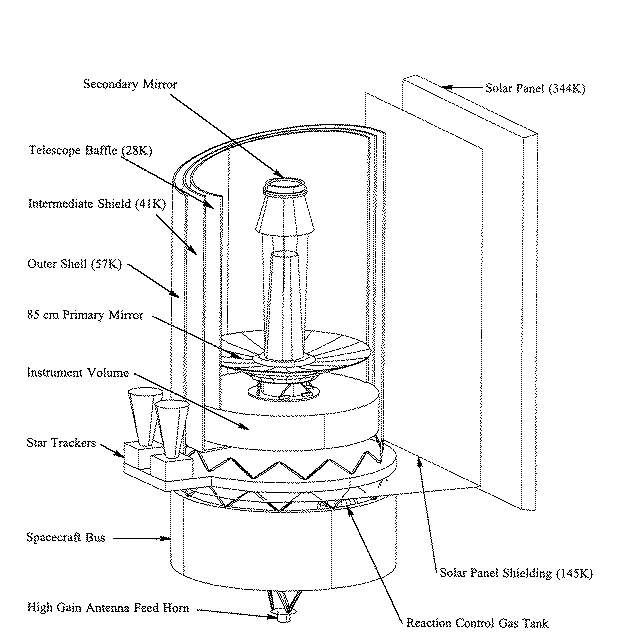
The basic concept of NIRST is shown above.
The NIRST concept considers a meter-class telescope in a heliocentric orbit that trails slightly behind the Earth. It will be passively cooled to temperatures low enough to operate sensitive, large format InSb arrays. The strawman design in the proposal used an 85 cm diameter telescope and an instrument package with no moving parts: a two-color 3.2 micron and 4.6 micron camera with 1024x1024 pixels covering a 15'x15' FOV, and a low resolution spectrograph (1% resolution) which will observe 5 long slits simultaneously. This simple instrument will detect sources as faint as 50 nJy at 3.2 microns (L magnitude of 24.5) and 180 nJy at 4.6 microns (M magnitude of 22.5), and obtain spectra to L = 20.
The basic concept of NIRST is shown above.
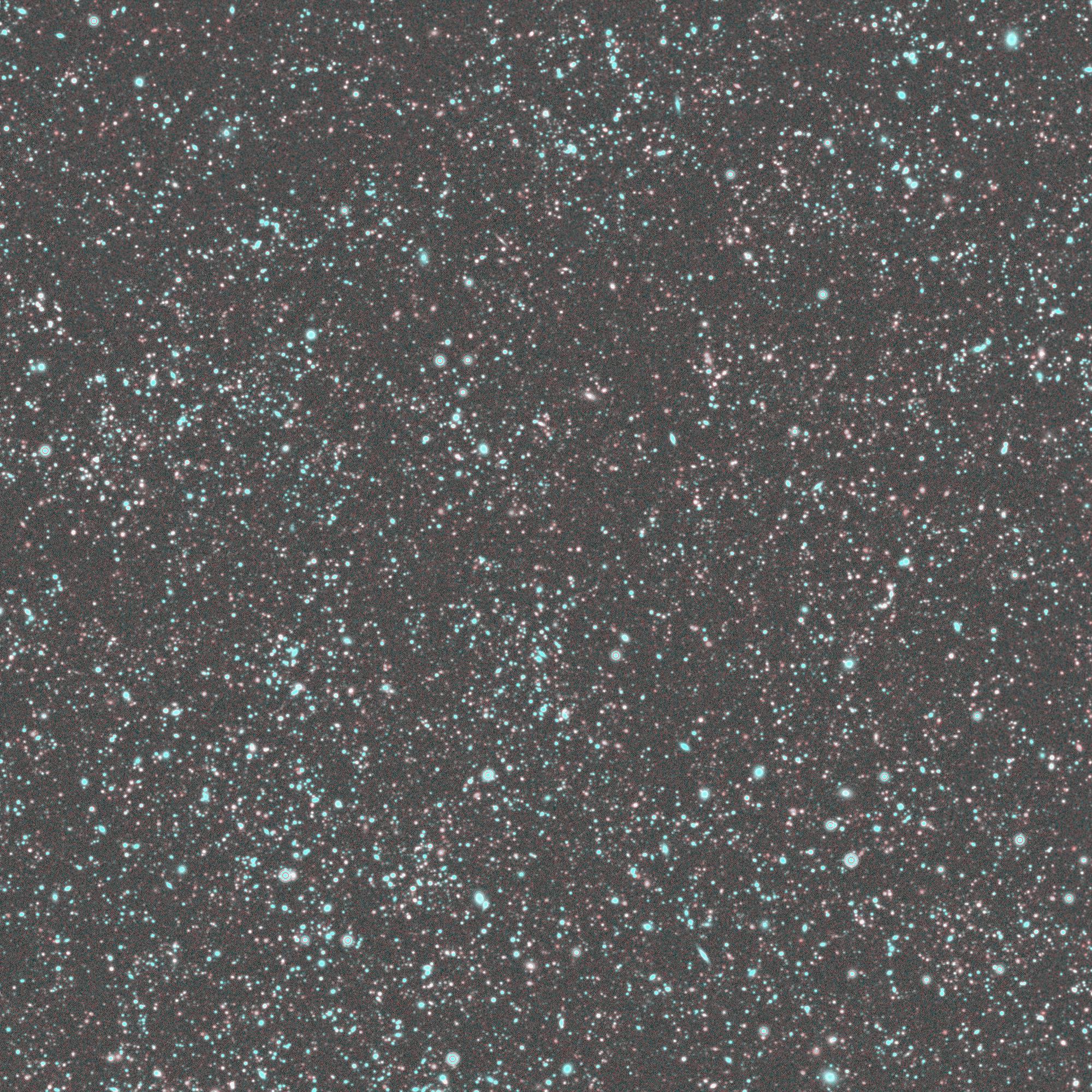 A 2000x2000 1.3 Megabyte JPEG file showing the full 15'x15' FOV of the
NIRST camera. The noise levels have been set for 1 hour of integration
time, so NIRST will be able to survey 1 square degree per day to this
depth.
A 2000x2000 1.3 Megabyte JPEG file showing the full 15'x15' FOV of the
NIRST camera. The noise levels have been set for 1 hour of integration
time, so NIRST will be able to survey 1 square degree per day to this
depth.
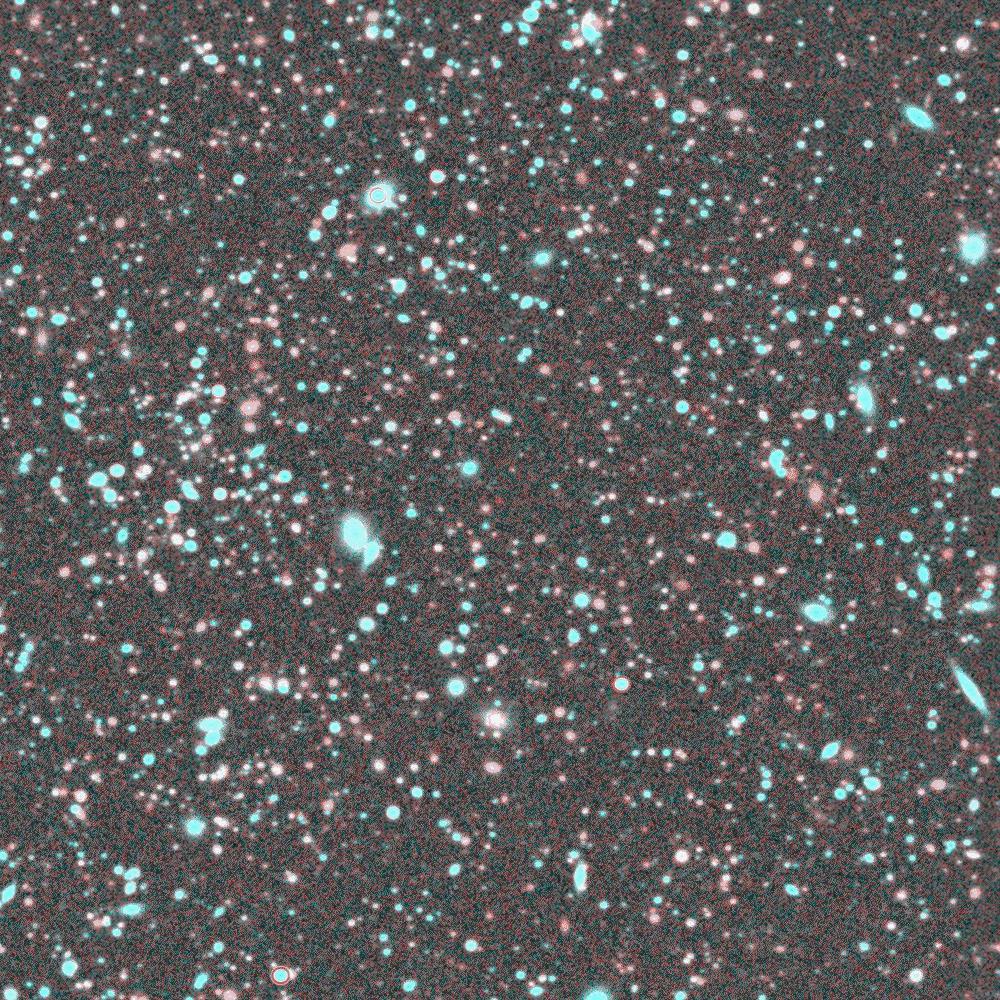 A 1000x1000 0.4 Megabyte JPEG file showing a 5'x5' portion of the FOV of the
NIRST camera.
The brightest brown dwarf in the 15'x15' FOV is centered in this
picture. It is the very red stellar object.
A 1000x1000 0.4 Megabyte JPEG file showing a 5'x5' portion of the FOV of the
NIRST camera.
The brightest brown dwarf in the 15'x15' FOV is centered in this
picture. It is the very red stellar object.